News

Israel Missile Update – 2000

Israel continues to produce its “Jericho” series of ballistic missiles. The two-stage solid fuel Jericho can deliver a nuclear warhead to any point in the Middle East and probably beyond. Israel is also pursuing a military satellite program and trying to construct a defensive shield against the missiles of its neighbors.

Recent developments

On April 6, 2000 Israel test-fired an unarmed nuclear-capable Jericho-1 missile westward into the Mediterranean Sea. The missile flew more than 300 kilometers before splashing down near a U.S. Navy cruiser that was not forewarned of the test. The Jericho-1 is a two-stage, solid propellant missile capable of carrying a 450 to 650 kilogram payload up to 500 kilometers – as far as Cairo or Damascus. Israel ordered a number of the missiles from France in the 1960s and shortly thereafter began to develop them on its own.

Israel began its more ambitious Jericho-2 program in the 1970s. The Jericho-2 can deliver a 750-1,000 kilogram payload far enough to reach Tripoli, Baghdad, Tehran and even points in Russia. The missile has been in production for roughly a decade, so it is safe to assume that at least dozens are armed with nuclear warheads.

Israel’s space program

Israel’s space industry suffered a blow in January 1998 with the failed deployment of the country’s second military surveillance satellite, the Ofek-4. The Ofek-4 was slated to replace the aging Ofek-3 which was launched in April 1995. The Ofek-3 has reportedly already exceeded its anticipated life-span by more than two years. A second attempt to launch an Ofek-4 – planned for late 2000 – may be postponed due to budget cuts in the Ministry of Defense.

With the launch of the Ofek-1 in September 1988, Israel became the eighth country to launch its own satellite. The 156 kilogram experimental Ofek-1 burned up in January 1989, three months later than expected. Its replacement, the Ofek-2, was launched on April 3, 1990. The 160 kilogram Ofek-2 was reported to be the same size as its predecessor but was said to offer the possibility of two-way communication. (The Ofek-1 could only broadcast information.) All Ofek satellites have been launched westward, against the earth’s rotation, by three-stage, solid-propellant Shavit rockets in order to eliminate the possibility that debris from the rocket or satellite would fall over Israel’s Arab neighbors. By launching the Ofek satellites against the earth’s rotation, Israel has demonstrated that it has the rocket power to deliver a nuclear payload well beyond the Middle East. The Shavit launcher and Jericho-2 missiles use the same rocket motors.

In March 2000, Israel and the Russian Space Agency signed an agreement calling for the launch of eight Earth Resources Observation Satellites (EROS), whose technology is based on the Ofek series, from the Svobodnyy cosmodrome in eastern Russia.

Israel is also interested in promoting the Shavit as a commercial space launcher. In May 1998, Israel Aircraft Industries (IAI) announced an agreement with the Coleman Research Corporation of Florida to develop a small expendable launch vehicle, based on Shavit technology. The deal was contingent upon overcoming two obstacles in order to satisfy U.S. government requirements. The first was a U.S. law requiring that missiles launched from U.S. territory be comprised of over 50% U.S. parts, and the second was that no launch system derived from a military launcher could be used for U.S. commercial purposes. IAI claimed to have satisfied the requirements.

Missiles for defense

Israel’s Arrow program is a joint U.S.-Israel effort to develop a system for destroying missiles launched from Syria, Iran and Iraq by intercepting them before they enter Israeli airspace.

In March 2000 the Israeli Air Force (IAF) took command of the first Arrow missile battery, deployed south of Tel Aviv, although the battery will continue to undergo development and testing. A second battery may be deployed north of Tel Aviv near Hadera. After Iran’s test of the Shahab-3 missile in July 1998, Israel began to seek funding for a third battery estimated to cost $169 million, $45 million of which the United States has reportedly agreed to provide.

The program has made significant strides since the first test flight of the Arrow-2 in July 1995. An August 1996 test was designed to evaluate the Arrow-2’s guidance and control system and its ability to receive in-flight updates from the fire control center. In September 1998 the Arrow’s three components – the missile, radar and fire-control systems – were tested together for the first time. In its latest test on September 14, 2000, an Arrow missile shot down a rocket simulating a Scud, and after seven successful tests out of a total of eight, the Arrow’s developers declared the system ready for use.

Since the program began in 1988, the United States has reportedly spent more than $700 million to develop the Arrow, at least $500 million more than official Israeli Ministry of Defense estimates. Total program costs through 2010 are estimated at $2 billion, 55% of which will be paid by Israel. Israeli entities working on the Arrow include the MLM Division of Israel Aircraft Industries Ltd. (IAI), Elta Electronics Ltd., Rafael, Israeli Military Industries (IMI), Tamam, Ramta, and Tadiran Electronics Ltd. The missile includes components produced by Lockheed Martin and Raytheon of the United States.

Israel is also working on a system designed to destroy incoming short-range rockets with a concentrated laser beam. The Tactical High-Energy Laser (THEL) is still in the developmental stage and its effectiveness and future remain unclear.

In its first live-fire test in June 2000, the system shot down a single Russian-made Katyusha rocket. Two months later, the system shot down two Katyushas simultaneously. More tests are likely to continue in 2001.

The system, being developed in the United States by the TRW Corporation, the U.S. Army, and Rafael, Tadiran and Elta in Israel, is designed to detect an incoming rocket, track the rocket’s path, and hold a concentrated laser beam on the rocket’s warhead until the heat generated by the laser causes the warhead to detonate. According to the U.S. General Accounting Office, the United States is contributing $106.8 million toward the program and Israel is contributing $24.7 million.

Despite the recent successes, questions about THEL’s effectiveness remain. A March 1999 GAO report stated that THEL faced significant technological challenges, including problems with the valves that control the flow of chemicals through the laser and with the low-power laser itself. In addition, Israeli officials have reportedly expressed doubt over THEL’s effectiveness in defending the country against Katyusha rockets. Israel intelligence and military officials reportedly suspect that Hezbollah forces in southern Lebanon have deployed a new version of the Katyusha with a range between 80 and 100 km – four times the range of the standard Katyusha that THEL is designed is destroy.

For additional information on Israel’s missiles, see “Israel: Arrow Anti-Tactical Ballistic Missile System and Ofek Satellite Program Suffer Setbacks,” Volume 4, Issue 2 (March-April 1998), “Israel: U.S. Turns Down Shavit Rocket,” Volume 2, Issue 3, (May-June 1996), “Israel: How Far Can Its Missiles Fly?” Volume 1, Number 5 (June 1995) of the Risk Report.

Clinton’s Super Computer Push

Asian Wall Street Journal
September 19, 2000, p. 6

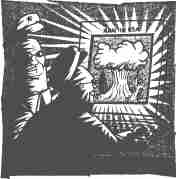
U.S. companies are selling countries the super computers they need to build the weapons America will have to defend against.

Much has been made lately of the U.S. proposal for a national missile defense system, and whether U.S. taxpayers should pay billions of dollars to counter threats from China and other countries developing nuclear and missile arsenals. But what American taxpayers don’t know is that U.S. companies could soon sell these countries the computers they need to build the missiles America will have to defend against.

Last month, after intensive lobbying by the U.S. computer industry, President Bill Clinton decided to lower once again the barriers that control the export of American-made, high-performance computers. As a result, arms makers in China and other countries will soon be able to buy computers up to 14 times more powerful than the ones they were able to get only eight months ago. Moreover, under the new regulations, which are scheduled to take effect in January, countries allowed to purchase such computers can do so without any security review by the U.S. government.

The decision pleased Silicon Valley, but it exposes the rest of the world to greater nuclear and missile threats. High-speed computers are the most powerful tools known for designing nuclear weapons and the missiles to deliver them. These computers can simulate the implosive shock wave that detonates a nuclear warhead, as well as virtually every force affecting a missile from launch to impact.

The Clinton administration decided to allow the export of high-performance computers with processing speeds between 12,500 and 28,000 MTOPS (millions of operations per second), claiming the new rules would “promote national security” while easing “the unnecessary burdens on both government and industry.” But according to recent studies sponsored by the U.S. Commerce and Defense Departments, computers operating at these speeds will give the biggest boost to foreign nuclear and missile makers.

Consider China. Beijing is now trying to develop smaller nuclear warheads to fit on new, longer-range missiles. Many of these will be aimed at U.S. cities.

But to achieve their goals, Chinese bomb designers will need computer simulations. Live nuclear tests are now taboo. What sort of computing power will be required? For “nuclear blast simulation,” the two studies say, China will need computers operating between 10,457 and 21,125 MTOPS – precisely the ones now being cleared for export.

China is also improving its missiles and submarines. To simulate the “aerodynamics of [a] missile at Mach 2.5,” the studies say, computing speeds of 17,503 to 20,057 MTOPS are needed. For a “3D simulation of [a] submarine,” and the “modeling of turbulent flow” around it, the studies list a speed of 21,125 MTOPS.

The boost to China’s military will be dramatic – and unprecedented. At the start of this year, the Chinese military could only buy computers rated at 2,000 MTOPS – just above the desk-top level.

The Clinton administration defends its decision by citing the increasing power of computer chips. More powerful chips, the White House says, will make more powerful computers too numerous to control for export. It is undoubtedly true that chips are getting faster. The computer industry has long argued that because computing power tends to double every 18 months, due to better manufacturing techniques, the export controls should be eased.

In a report on its decision last month, the Clinton administration told Congress that four of Intel’s new “Itanium” chips, if wired together in a single machine, would perform at speeds of about 24,000 MTOPS. The report predicted that these chips would be introduced in October 2000, resulting in “widespread commercial availability.” And it implied, but did not say, that computers using these chips would be available from abroad and too numerous to control.

Illustration/ H. Harrison

But the administration is simply wrong. Chuck Mulloy, an Intel spokesman, stated last week that the Itanium chip won’t be available in volume to computer makers until mid-2001. Computers using those chips won’t come to market until sometime after that – a year from now at the earliest. And there is no proof that even then such computers will be available in large quantities from foreign manufacturers.

The U.S. government’s own General Accounting Office has greeted the Clinton administration’s reasoning with polite contempt. After investigating the administration’s decision to significantly relax computer export controls in 1996, the GAO found the decision “lacked empirical evidence or analysis.”

More recently, the GAO criticized the administration for “relax[ing] controls based on what computer manufacturers asserted would be their next mass-produced processors, not on actual sales.” As for the argument that China could buy the computers elsewhere, it said, “U.S. companies and their international business partners overwhelmingly dominate the international market for supercomputers.”

So why is the Clinton administration allowing American manufacturers to outfit arms-makers around the world? The most plausible answer resides in campaign contributions.

Since January 1, 1999, the computer industry has given more than $3.2 million to the Democratic National Committee, Mr. Clinton’s party machine, making it the committee’s fourth largest industry contributor, according to the independent Center for Responsive Politics. The industry also shelled out money to the Republican National Committee, but not so generously. It was the ninth largest donor with $1.9 million, according to the center.

This tide of silicon dollars coincides perfectly with Mr. Clinton’s latest decision to relax export controls. In mid-1999, the administration announced that it would lift export restrictions on computers operating between 2,000 and 6,500 MTOPS. The change didn’t take effect until January 23, 2000 because of a six-month delay imposed by Congress. Then in February 2000, the administration announced it would raise the level from 6,500 to 12,500 MTOPS by August. The last change takes the level from 12,500 to 28,000 MTOPS.

The new regulations are particularly troubling with regard to China. Of the hundreds of computers capable of 2,000 MTOPS or higher that were exported to China since 1996, only a handful have received the post-shipment security checks that are required by U.S. law. Under flimsy procedures established by China and the U.S. in 1998, the Chinese government has rejected almost every request to locate the whereabouts of U.S. built computers, claiming the checks violate its national sovereignty.

A number of dangerous Chinese buyers stand to benefit. One is the Harbin Institute of Technology, which makes rocket casings and other components for China’s long-range nuclear missiles. Another is Northwest Polytechnical University, which develops engines and guidance systems for those missiles. Both were blocked from acquiring U.S. computers under previous rules. Now both will be able to buy as many as they want.

In effect, America is competing against itself. Ironically, it is trying to base its security on advanced technology, while at the same time hawking that technology to the rest of the world. It simply won’t work. With the revolution in military affairs, the modern battlefield is electronic, and computing power now decides the outcome of wars.

In future conflicts, do Americans really want American soldiers to face powerful American computers in the hands of the enemy? That is the real question posed by export controls. The answer should be no.

North Korea Missile Update – 2000

North Korea has not tested a missile since the August 1998 flight of a three-stage Taepo-dong-1 rocket that failed to put a satellite into orbit. A year later, in September 1999, North Korea announced that it would freeze its missile testing, and this ban was extended in June 2000. Despite the moratorium, however, North Korea continues to develop long-range nuclear-capable missiles and continues to export missile components and technologies as a way to earn hard currency.

Missile testing

In December 1998, U.S. intelligence reportedly saw Taepo-dong missile components being moved from a storage site to a launch pad, and warned Japan that North Korea might be preparing for another missile test. The following July, officials said North Korea planned to test the Taepo-dong-2 missile, which has a reported range of 3,350 miles, enough to reach Alaska and Hawaii. South Korea, Japan and the United States threatened to retaliate with sanctions if the test were carried out. That same month, South Korean intelligence reported that North Korea was building a new underground missile launch site close to the Chinese border.

In August 1999, North Korea announced that it was willing to negotiate over its plans to test a long-range missile. A month later, an American delegation met with the North Koreans in Berlin. The two sides agreed that North Korea would stop testing its missiles and in response the United States agreed to ease some economic sanctions against North Korea.

Barely a week after announcing the moratorium, North Korea declared its sovereign right to continue to launch missiles. However, a State Department official said the Clinton adminstration did not expect North Korea to break its pledge. In June 2000, North Korea extended its ban on missile testing, and the administration responded by announcing a partial lifting of economic sanctions.

Russian President Vladimir Putin, on the first day of a visit to North Korea in July 2000, announced that North Korean leader Kim Jong Il had promised that his country would abandon its intercontinental missile program if other states provided it with technology for “peaceful space research.” Soon after the visit, Kim reaffirmed to Putin North Korea’s commitment to drop its program if other countries would launch two or three satellites a year for Pyongyang at their expense. However, Kim later said he was not serious and “laughingly” made the offer to Putin.

Exports of missile technology

North Korea openly admitted in June 1998 that it exported missiles to a number of countries. It argued that if the United States wanted to stop the exports, the United States needed to “lift the economic embargo [on North Korea] as early as possible and make a compensation for the losses to be caused by discontinued missile export.” According to the U.S. State Department, North Korea earned nearly $1 billion in missile sales over the previous decade, making it the foremost missile exporter in the world.

In September 1999, North Korean television displayed what appeared to be the Taepo Dong-1 missile. The images confirmed that the first stage of the missile has a single engine exhaust and not a cluster of four smaller motors as originally thought. The single engine exhaust is similar to that found on Pakistan’s Ghauri and Iran’s Shahab-3 missile, supporting the allegation that North Korea aided in their development.

In November 1999, the press quoted a Pentagon intelligence report to the effect that an “Iranian government agency involved in missile production” had received 12 medium-range ballistic missile engines from North Korea. Intelligence officials reportedly said the engines were the same as those used in the Nodong missile.

Imports of missile technology

In July 1999, two members of the Japanese parliament claimed that Japan had supplied key elements to North Korea’s missile program, particularly argon gas burners and semiconductors. In June 2000, the press reported that Russian and Uzbek companies that manufacture missile components were selling a special aluminum alloy, connectors, relays, and laser gyroscopes to a North Korean company.

For more information on the North Korean missile program, please see “North Korea Missile Update 1998,” in Volume 4, Issue 6, November-December 1998.

Pakistan Missile Update – 2000

Pakistan continues to pursue an ambitious program for building ballistic missiles. Pakistan has acquired a series of solid fuel missiles from China, a series of liquid fuel missiles from North Korea, and the equipment needed to produce both.

Hatf-1A: In February 2000, Pakistan tested the Hatf-1A surface-to-surface solid fuel missile developed by the Pakistan Atomic Energy Commission (PAEC). According to one report, the missile has a range of 100 kilometers, has improved accuracy and can carry larger payloads than the Hatf-1. The launch broke Pakistan’s traditional pattern of testing missiles only in response to such tests by India.

Ghauri: In April 1998, Pakistan tested the Ghauri (Hatf-5), its version of the North Korean Nodong. The nuclear-capable surface-to-surface missile uses liquid fuel and can carry a 700 kilogram payload 1,000-1,500 kilometers. It has been acquired by and is being developed by the A. Q. Khan Research Laboratories (KRL).

Shaheen: The day after the Ghauri-II missile test, Pakistan successfully tested the solid fueled Shaheen-I (Hatf-4). Reports claim the missile is based on the Chinese M-11, and has a range of 600-750 kilometers. It is being developed by the National Development Complex (NDC).

Shaheen-II: At the annual Pakistan Day parade in March 2000, Pakistan unveiled the road-mobile Shaheen-II missile. Pakistani authorities claim that the two-stage solid fuel missile can carry a 1,000 kilogram payload 2,500 kilometers.

Chinese and North Korean assistance

In addition to supplying missiles outright, China and North Korea have recently provided Pakistan with equipment to help produce missiles.

In April 1999 it was reported that China’s Poly Ventures Company transferred American-manufactured specialized metal-working presses and a special furnace to the NDC, and the New York Times reported in July 2000 that China had increased its shipments of specialty steels, guidance systems and technical expertise to Pakistan.

According to Jane’s Defence Weekly, Indian officials seized a North Korean ship believed to be carrying machinery destined for a Pakistani missile factory at Fatehgunj in June 1999. Indian investigators claimed the cargo included a heavy duty press, lathe machines, a plate bending machine, toroidal air bottles used in missile guidance, and other equipment used in the production of missile systems.

For more information on Pakistan’s missile program, see “Pakistan’s Nuclear-capable Missiles,” Volume 5, Issue 1 (January-February 1999) of the Risk Report.

Egypt Nuclear, Chemical and Missile Milestones – 1960-2000

1960: Egypt imports German engineers and scientists to help develop ballistic missiles.

1961: Egypt starts operation of a Soviet-supplied 2-megawatt research reactor at the Inshas Nuclear Research Center.

1963-67: Egypt uses chemical weapons (tear gas, phosgene and mustard agents) in the civil war in Yemen.

1972: Soviet Union supplies Egypt with FROG-7 missiles.

1973: Egypt reportedly imports nine Soviet launchers and approximately 18 Scud-B missiles; launches three at Israeli positions in the Sinai during the October 1973 Arab-Israeli war. The Soviet Union reportedly prepares to send nuclear warheads for the Scud-B to Egypt during the war in response to Israel’s deployment of nuclear weapons.

Early 1980s: Egypt provides North Korea with Soviet-made Scud-Bs for reverse engineering.

1981: Egypt signs the Nuclear Non-Proliferation Treaty.

1982: Egypt begins cooperation with Argentina and Iraq on development and production of a 1,000km-range missile known as the Condor II in Argentina or the Badr-2000 in Egypt. German and Italian companies supply missile technology.

1986: Egypt gains access to the North Korean Scud-B program, including technical documents and drawings.

1987: Egypt reportedly completes construction of an experimental nuclear fuel factory at Inshas Nuclear Research Center.

1987-1990: Egyptian experts work in Iraq on Condor II missile development.

1988: An Egyptian military officer is arrested in Baltimore for trying to smuggle carbon-carbon materials out of the United States. A California aerospace engineer, Egyptian-born Abdelkader Helmy, one of the defendants in the case, later says that he had been recruited for the scheme by Egypt’s defense minister, General Abdel Halim Abu Ghazala.

1989: At the Chemical Weapons Conference in Paris, Egypt defends the right of Arab countries to produce chemical weapons as a counterbalance to Israel’s nuclear weapons.

1989: U.S. officials say Egypt is buying thionyl chloride, a chemical weapon precursor, from companies in India.

1990: Egypt’s Arab-British Dynamics reportedly begins production of the Scud missile at its Heliopolis factory.

1991: Rear Admiral Thomas A. Brooks, director of U.S. naval intelligence, states in Congressional testimony that Egypt is among the non-NATO/Warsaw Pact countries that “probably possess” an offensive chemical warfare capability.

1992: Egypt and Argentina sign a contract to build a 22 megawatt research reactor at Inshas.

1996: U.S. intelligence reportedly detects at least seven shipments from North Korea to Egypt of materials for Scud-C missiles, including steel sheets and support equipment.

July 1997: The CIA confirms that Egypt obtained spare parts and technology from North Korea and Russia last year for its Scud-B missiles.

November 1997: Egypt’s second research reactor at Inshas goes critical. The 22-megawatt reactor is an open pool-type multipurpose reactor cooled and moderated by light water. It uses low-enriched uranium for fuel.

February 1998: Egyptian President Hosni Mubarak and Argentine President Carlos Menem inaugurate Egypt’s second nuclear reactor at Inshas. The $154 million reactor and a $14 million nuclear fuel facility was built by INVAP of Argentina.

October 1998: President Mubarak says Egypt would acquire nuclear weapons if it became necessary. “Acquiring material for nuclear weapons has become very easy and it can be bought,” he said.

February 1999: A CIA report says Egypt “continues its effort to develop and produce” the Scud B and Scud C ballistic missiles. It also says Egypt continues to obtain ballistic missile components and associated equipment from North Korea.

March 1999: The U.S. State Department sanctions three Egyptian companies – Arab-British Dynamics (ABD), Helwan Machinery and Equipment Company, and the Kader Factory for Developed Industries – for engaging in missile proliferation activities with North Korea.

March 1999: The United States agrees to sell Egypt a $3 billion arms package that includes a Patriot air-defense missile system, 24 advanced F-16D fighter jets, and 200 M1 Abrams tanks. This deal follows an earlier agreement in which Egypt acquired from the United States more than 10,000 rounds of armor piercing depleted uranium ammunition for its M1A1 tanks.

February 2000: Lockheed Martin Naval Electronics and Surveillance Systems wins a contract to upgrade five Egyptian air defense radars for enhanced tactical ballistic missile defense.

February 2000: U.S. and Israeli intelligence allege that Western technology obtained by Egyptian government-owned companies is being sent to North Korea where it is adapted and returned as advanced missile components.

India: Ballistic Missile Update – 2000

India has continued to produce and test all five of the missiles being developed under its Integrated Guided Missile Development Program (IGMDP).

Prithvi-I: The nuclear-capable Prithvi-I surface-to-surface missile is currently in service with the Indian armed forces. Built by Bharat Dynamics Ltd. (BDL), the single-stage liquid-fueled missile was first tested in early 1988. It can carry a 1,000 kilogram payload 150 kilometers.

In June 1997, it was reported that India moved fewer than a dozen Prithvi-I missiles close to the Pakistani border. Prime Minister I. K. Gujral denied that India deployed the missiles, but Western officials confirmed in November that India had in fact shifted the missiles from storage in central India to sites about 100 kilometers from the Pakistan border.

Prithvi-II: In January 1996, India successfully test fired the longer-range nuclear-capable Prithvi-II. It can carry a 500 kilogram payload 250 kilometers, far enough to reach Pakistan’s capital of Islamabad. Prithvi-II is currently in service with the Indian armed forces. According to the Defense Research and Development Organization (DRDO), four different types of warheads have been developed for the Prithvi, including a pre-fragmented warhead, two different submunition warheads, and an submunition incendiary warhead.

Agni: In April 1999, India tested the Agni-II, an intermediate-range nuclear-capable ballistic missile. Unlike the first Agni, which had a solid-fueled first stage and a liquid-fueled second stage, the Agni-II is believed to be powered entirely by solid fuel and is said to have a mobile launch capability. It reportedly is also equipped with a global positioning system (GPS). The 20-meter-long missile can carry a 1,000 kilogram payload 2,000 kilometers. Dr. A. J. P. Abdul Kalam, head of the DRDO, stated in 1999 that “Agni-II was designed to carry a nuclear warhead if required” and claimed in an interview that India had tested an Agni-sized payload during its May 1998 nuclear tests. The April 1999 missile test was reportedly designed to demonstrate the Agni’s mobile launch capability, its solid-fuel propulsion system, its features designed to carry special payloads, and its navigation, guidance and control systems.

Dhanush: A naval version of the Prithvi, the 8.5 meter long Dhanush, was tested in April 2000 from a ship anchored 20 kilometers offshore in the Bay of Bengal. The test was reportedly described as only a “partial success” by V. K. Aarte, scientific advisor to the Indian Ministry of Defense. Officials at the DRDO declined to provide specific details about the test, but naval sources reportedly said the missile crashed into the sea approximately 25-30 kilometers from the launch vessel.

Sagarika: The New York Times reported in April 1998 that Russia was helping India build a nuclear-capable sea-launched missile called the Sagarika (“Oceanic”). Both India and Russia denied cooperating on the project, but India reportedly confirmed in 1999 that its Aeronautical Development Establishment (ADE) was developing a 300-kilometer range cruise missile. According to the New York Times, Russia acknowledged to American officials in 1995 that Russian scientists were providing India with technological support, but insisted that their assistance was limited and involved only the technology needed to launch an underwater missile. However, an American official told the Times that Russia was providing “significant engineering services” as well as the parts and equipment necessary to build and launch the missile. It is possible that the Sagarika will be deployed on the Advanced Technology Vessel (ATV), India’s nuclear powered submarine, which is under development with Russian assistance.

Surya: Indian Defense Minister Rawat acknowledged in early November 1999 that India was developing the 5,000-kilometer range Surya (“Sun”) ballistic missile. Indian officials, however, subsequently denied Rawat’s statement.

Foreign helpers

Indian officials boast that all of its missiles are indigenously developed. After the successful test of the Agni-II, Dr. Kalam was quoted as saying: “I don’t have a partner in the Atlantic or beyond the Indian Ocean to help me,” and as claiming that the Agni is “less than 10 percent” imported. However, India’s missiles have all been developed with extensive outside aid. The United States has provided assistance recently. American companies Digital Equipment Corp. and International Business Machines (IBM) both supplied the Indian Institute of Science with supercomputers capable of designing nuclear weapons and missiles, and Viewlogic Systems Inc. of Marlborough, Massachusetts sold computer software to an Indian missile manufacturer.

Pakistan Nuclear Update – 2000

Since conducting nuclear tests in May 1998, Pakistan has continued to develop its nuclear weapon program. Two new reactors and a plutonium processing facility have become operational, and Pakistan may now be able to produce enough plutonium for one atomic bomb per year.

In August 1999, N. M. Butt of the Pakistan Institute of Nuclear Sciences and Technology (PINSTECH) was quoted as saying that Pakistan has the ability to build a nuclear weapon of any type or size, including a neutron bomb, and according to Ishfaq Ahmed, Chairman of the Pakistan Atomic Energy Commission (PAEC), Pakistan is self-reliant in the production of heavy water, enriched uranium, zirconium, and spare parts for its nuclear industry.

Reactors and nuclear infrastructure

Chashma: The 300-megawatt Chashma reactor (Chasnupp) went critical in May 2000. The reactor, designed and built by Chinese companies under the auspices of the China National Nuclear Corporation (CNNC), is modeled on the Qinshan-1 power reactor.

Khushab: According to two nuclear trade publications, the heavy-water moderated Khushab plutonium production reactor began operating in early 1998. Press reports put the power of the reactor at 50-70 megawatts. A reactor operating at that power can generate enough plutonium for at least one atomic bomb per year. A U.S. official has been quoted as saying that Khushab is now “being operated as a dedicated weapons plutonium production reactor.”

Khushab heavy water plant: In March 2000, Nucleonics Week reported that Pakistan had successfully smuggled into the country components and equipment for a heavy water production plant which was then built at Khushab. The publication said construction was finished in time to generate enough heavy water to start up and operate the reactor in 1998. U.S. officials reportedly disagree as to whether China was the source of the heavy water plant.

In November 1999 it was reported that the PAEC was developing a new uranium field in Tumman Leghari, in the southern Punjab. Pakistan’s previous source of uranium, a mine at Baghalchar, which opened in 1974, was being closed. There was speculation that the site was closed due to foreign pressure, but the PAEC claimed that there were simply no more uranium sources left there.

According to an August 2000 U.S. Central Intelligence Agency (CIA) report, Chinese entities have provided extensive support in the past to Pakistan’s nuclear programs, and the CIA “cannot preclude ongoing contacts.”

Iran Nuclear Update – 2000

Iran has been a member of the Nonproliferation Treaty since 1970 and claims not to have a nuclear weapons program. U.S. officials, however, believe Iran is trying to build the bomb secretly and is using a nuclear power program to mask the effort.

Bushehr: Russia continues to build a 1000-megawatt light-water reactor at Bushehr despite American efforts to stop the project. Germany cancelled its plans to build the reactor in 1979 soon after the outbreak of the Iranian revolution.

In 1998, the United States persuaded Turboatom, a Ukrainian firm, to abandon its $45 million contract to build turbines for the Bushehr reactor. That same year, Russian officials announced that the Bushehr power station would double in size, with four reactors instead of two as originally planned.

In April 2000, the United States successfully persuaded the Czech Republic to bar its companies from supplying components to Bushehr, including the ZVVZ Milevsko company which had been contracted to supply air conditioning equipment. The United States also appealed directly to the Russians by offering them $100 million to abandon the reprocessing of spent fuel from other countries and to stop the construction of Bushehr. However, Russia’s Minister of Atomic Energy Yevgeny Adamov insisted that Russia would not give up its contract with Iran, which could be worth $1 billion.

Construction at Bushehr is running about 18 months behind schedule, and Russian officials now estimate the project will be completed by 2002. According to Yevgeny Reshetnikov, Russia’s deputy minister of atomic energy, large-scale physical works at Bushehr began in February, and there were approximately 47,000 pieces of usable German equipment available. Another 10,000 pieces of mechanical and electrical equipment are available for use, but they lack the necessary quality assurance documentation or are obsolete.

Other nuclear imports: It was reported in 1998 that Western intelligence agencies believed that the Atomic Energy Organization of Iran (AEOI) was trying to procure equipment used in laser enrichment of uranium. According to the reports, the AEOI was working on both molecular laser isotope separation (MLIS) and atomic vapor laser isotope separation (AVLIS) at the Laser Research Center in Tehran. Iran has also been indigenously producing neodyne ytterbium-aluminum (Nd-YAG) lasers.

In February 1999 the United States imposed sanctions on ten Russian entities for allegedly selling nuclear and missile technology to Iran. The companies are: Baltic State Technical University, Europalace 2000, Glavkosmos, Grafit (State Scientific Research Institute of Graphite), INOR Scientific Center, Moso, Polyus Scientific Production Association, D. Mendeleyev University of Chemical Technology of Russia, Moscow Aviation Institute, and divisions of the Scientific Research and Design Institute of Power Technology.

The Real Nuclear Gap

The New York Times
June 16, 2000, p. A 33

The Los Alamos National Laboratory is facing another nuclear mystery. Two computer hard drives — full of weapons secrets — are missing. There is no proof that they have fallen into the wrong hands, but even if they have simply been misplaced, there is cause for worry. The missing drives are but a symptom of a widespread problem: sensitive information about nuclear weapons is not protected as carefully as nuclear hardware, even though it is just as dangerous if left unsecure.

The Energy Department, which oversees the national laboratories, isn’t revealing what the drives contain. But the data is used by the department’s Nuclear Emergency Search Team, the experts who must be ready, at a moment’s notice, to jump on a plane and find any nuclear bomb that might be planted on American soil — and then disable it.

The data on the drives, each about the size of a deck of cards, tells the team how to detect nuclear material in a multitude of situations — when it is underground, or encased in concrete or masked by the presence of natural or manmade background radiation.

“What you have is an entire library of nuclear signatures,” a Pentagon official familiar with the team’s operations told me. These are the guides that help the team uncover various kinds of nuclear material.

What worries this official is that the data could teach a foreign bomb designer ways to evade American detection efforts.

“If you know what your enemy is looking for, it is much easier to hide it,” he says. “If a mountain lion could morph his footprints into a turkey’s, think how difficult lion hunting would be. You would never know where the lion might be hiding.”

The data could be used to foil our efforts to disable a bomb. Some terrorist could “put an extra wire, or an extra bump, or an extra piece of metal where there isn’t supposed to be one,” he warns. This could prevent the search team from figuring out what kind of bomb they were dealing with.

The missing data also reveal how a stolen bomb might be set off. Most nuclear weapons are prevented from exploding by an internal safety system, but the data would help bypass it. To make matters worse, the drives include information about Russian nuclear designs. A terrorist group or rogue nation with the drives is a chilling thought.

The gaps in security that produced this mess are dismaying. They reveal the government’s failure to grasp an essential point: Information can be more important than hardware. As terrifying as the theft of one or two bombs would be, it is not nearly as frightening as the loss of the formula for producing an unlimited number.

Yet the protection of information does not get the same respect, and that extends beyond weapons labs.

The State Department, for example, has had its own security problems, including the disappearance of a laptop that contained highly sensitive files, including intelligence sources and methods related to weapons proliferation. And John Deutch, the former director of Central Intelligence, loaded classified information into unsecure computers in his home.

In the case of the missing hard drives at Los Alamos, a total of 86 members of the Nuclear Emergency Search Team had access to the vault in the X division, where the hard drives were stored. Of them, 26 could go in without escorts, and remove the hard drives without signing out or leaving any record that they had taken the material.

Thus, if two of the team members had not discovered the hard drives missing on May 7, when they searched the vault as a forest fire raged near the laboratory, the missing drives might have gone undetected even longer.

These casual security measures are a far cry from the stringent procedures used to monitor nuclear material. The United States protects its nuclear weapons zealously and tracks the plutonium and uranium used to make them as best it can. We try to follow the movement of every gram of nuclear material and to verify its whereabouts continuously. Shouldn’t we start protecting our nuclear information with the same resolve?

Testimony: The Export of Dual-Use Technology

Testimony of Gary Milhollin

Professor Emeritus, University of Wisconsin Law School and
Director, Wisconsin Project on Nuclear Arms Control

Before the Senate Committee on Governmental Affairs

May 26, 2000

I am pleased to appear before this distinguished Committee to testify on the export of dual-use technology. I would like to submit three items for the record. The first is an article on supercomputer export controls that I wrote for the Outlook section of the Washington Post on March 12, the second is an article on Iraqi procurement efforts that I wrote for the New Yorker magazine on December 13, 1999 and the third is a report entitled “25 Myths about Export Control” that my organization prepared a few years ago but which is still relevant to the issues we face today.

The Committee has asked me to comment on two concepts that have been proposed for use in U.S. export controls. The first is known as “mass market status;” the second as “foreign availability.” The Committee has asked what the effect would be on our national security if these concepts were adopted as U.S. policy.

The two concepts are now incorporated into S. 1712, the bill recently reported by the Senate Committee on Banking, Housing and Urban Affairs. In my judgment, if this bill were enacted it would overturn and to a great extent nullify the system of export controls that the United States has built up over the past half-century. Our present law attempts to strike a balance between national security and freedom of trade. S. 1712 does not. Instead, it is a one-sided list of provisions advocated by commercial interests that have long opposed any form of export control. It would be more accurate to call the bill in its present form the “Export Decontrol Act.”

Items used to make nuclear weapons and long-range missiles

One of the most alarming things about the bill is that it would decontrol a series of items that are used to make nuclear weapons and long-range missiles. It would do so by giving the items what the bill calls “mass market status.” The items include such things as electronic devices used to trigger nuclear weapons, materials used to build missiles and produce nuclear weapon fuel, and high-speed computers used to design nuclear weapons and the missiles to deliver them.

  1. Nuclear weapon triggers

For at least twenty years, the United States has controlled for export the high-precision electronic switches needed to detonate nuclear weapons. These are key components in a nuclear weapon’s firing circuit and are popularly known as nuclear weapon “triggers.” In 1998, Iraq tried to provide itself with a supply of these switches under the guise of medical equipment. Iraq is allowed to import medical equipment despite the U.N. embargo, so Iraq bought a half dozen machines – called “lithotripters” – to rid its citizens of kidney stones. The lithotripter pulverizes kidney stones inside the body – without surgery. But each machine must be triggered by the same high-precision switch that triggers a nuclear weapon. Iraq tried to buy 120 extra switches as “spare parts.”

Iraq ordered the machines and switches from Siemens, in Germany, which sold the machines but passed the “spare parts” order to Thomson in France. The French government barred the sale. Siemens says that Iraq did get one switch with each machine and two more as spares, but to get any additional switches, Iraq will have to turn in a used switch for each new one and will have to allow the United Nations to inspect the use of the machines. The switches were controlled for export because they are on the control list of the Nuclear Suppliers Group, an international regime to which France, Germany and the United States belong.

These switches, however, would have “mass market status” under S. 1712, and would be decontrolled for export by the United States. The switches meet all the criteria listed in Section 211 of the bill, and the bill says that the Secretary of Commerce shall remove them from the control list if they meet the criteria. They meet the criteria as follows:

  • They are “available for sale in a large volume to multiple purchasers,” because they are used in radar, lasers and rockets as well as lithotripter machines and are advertised on the Internet by manufacturers in a number of different countries;
  • They are “widely distributed through normal commercial channels,” because they are sold by the thousands each year, including the hundreds sent to hospitals to keep lithotripter machines running;
  • They are “conducive to shipment and delivery by generally accepted commercial means of transport,” because they are small and easy to handle;
  • They “may be used for their normal intended purpose without substantial and specialized service provided by the manufacturer,” because they need only to be connected into an electrical circuit by attaching the appropriate wires.

Any bill that decontrols nuclear weapon triggers must be seen as seriously flawed.

Despite the fact that these items are available in volume inside the countries that produce them, they are not easily available to countries that are trying to make nuclear weapons. The reason is export controls. If the United States were suddenly to decontrol them, it would dismay our allies and destroy our credibility on nuclear nonproliferation.

  1. Glass and carbon fibers

Glass and carbon fibers are used widely in ballistic and cruise missiles. They go into solid rocket motor cases, interstages, wings, inlets, nozzles, heat shields, nosetips, structural members, and frames. Composites reinforced by carbon or glass fibers also form the high speed rotors of gas centrifuges used to enrich uranium for nuclear weapons.

In addition to these military applications, however, they are used in skis, tennis racquets, boats and golf clubs and are produced in a number of countries. This availability would give the fibers “mass market status” under the bill, despite the fact that they have been controlled for export since January 1981.

  • They are “available for sale in a large volume to multiple purchasers,” because they are advertised on the Internet and can be ordered in large quantities by anyone;
  • They are “widely distributed through normal commercial channels,” because they are shipped in large quantities to manufacturers of sporting goods;
  • They are “conducive to shipment and delivery by generally accepted commercial means of transport,” because they do not require special handling except for refrigeration in some cases;
  • They “may be used for their normal intended purpose without substantial and specialized service provided by the manufacturer,” because they can be incorporated in manufacturing processes in the form received.

In 1988, a California rocket scientist was arrested in Baltimore as he tried to illegally load 420 pounds of carbon fibers on a military transport plane bound for Cairo. The material was intended for the ballistic missile that Egypt was developing with Argentina and Iraq. The scientist was sentenced in June 1989 to 46 months in prison. It would be a big surprise to the world if the United States now decontrolled this material.

  1. Maraging steel

Maraging steel is a high-strength steel used to make solid rocket motor cases, propellant tanks, and interstages for missiles. Like carbon fibers, it is used to make centrifuge rotors for enriching uranium for nuclear weapons. In 1986, a Pakistani-born Canadian businessman tried to smuggle 25 tons of this steel out of the United States to Pakistan’s nuclear weapon program. He was sentenced to prison as a result. Maraging steel has been controlled for export since January 1981.

This steel is produced by companies in France, Japan, Russia, Sweden, the United Kingdom and the United States and it meets all the criteria for “mass market status.” Several steel companies list maraging steel on the Internet and can produce maraging steel in multi-ton quantities. Over the telephone, two American companies and one British company explained to my staff how to order 25 ton quantities with delivery in less than a month. Maraging steel is bundled and shipped much like stainless steel, which it closely resembles.

  1. Corrosion resistant valves

These special valves are essential components in plants that enrich uranium to nuclear weapon grade. Both Iraq and Iran are hoping to build such plants, and will need these valves in great numbers. The valves resist the corrosive gas used in the enrichment process.

These same valves are also used in the chemical, petrochemical, oil and gas, fossil power, pulp and paper, and cryogenic industries. Their size can range from very large gate valves down to tiny globe valves used in instrument and control lines. They are manufactured by companies in Australia, Japan, Russia, the United Kingdom and the United States. Smaller corrosion resistant valves have been controlled for export since October 1994, and larger valves have been controlled since October 1981.

These valves fit all of the criteria under Section 211 for “mass market status.” They are advertised on the Internet and are widely available to American buyers. A quick survey by my organization revealed that dozens of companies sell them in the hundreds per year. They would therefore be decontrolled under Section 211, to the great delight of Iraq and Iran.

  1. High-performance computers

The bill would also decontrol high-performance computers as “mass-market” items. This would benefit nuclear weapon and missile designers across the world. High-performance computers can simulate the implosive shock wave that detonates a nuclear warhead, calculate the multiplication of neutrons in an explosive chain reaction and solve the equations that describe fusion in a hydrogen bomb. For missile design, these computers can model the thrust of a rocket, calculate the heat and pressure on a warhead entering the atmosphere and simulate virtually every other force affecting a missile from launch to impact. Because of the billions of computations needed to solve these problems, a supercomputer’s speed is invaluable for efficiently finding design solutions.

The United States has always used its highest-performance computers to design nuclear weapons. It is reasonable to expect other countries to do the same. In 1997, the head of Russia’s nuclear program, Mr. Viktor Mikhailov, bragged that Russia would begin using American high-performance computers to design nuclear weapons, after Russia had imported several machines illegally from IBM and Silicon Graphics. The new machines were about ten times more powerful than anything the Russians had previously.

China can be expected to do the same. In a study released in 1998, the Department of Energy found that for countries such as China or India to improve their nuclear weapon designs, they will need computers able to perform about 4 billion operations per second. That performance level is right in the middle of the range of computers that President Clinton just decontrolled. If S. 1712 were to become law, industry would demand that even more powerful computers be decontrolled on the ground that they are “mass market” items.

The Commerce Department has argued many times that one can buy powerful American computer chips and assemble them overseas in computers that are difficult to control. However, that argument ignores the important fact that high-speed computers require maintenance and spare parts. Who would build a manufacturing or research complex around a computer system that could not be reliably serviced? Foreign companies are still buying American high-performance computers to the exclusion of virtually all other makes. The reason is simple: American companies provide both reliable products and reliable service. There is still no evidence that foreign competitors can match it.

Foreign availability

Section 211 would also decontrol many sensitive items on the ground that they have “foreign availability status.” The definition of “foreign availability” in the bill is so sweeping that it covers virtually anything that a controlled country can buy from a rogue supplier. If Iran or Pakistan or Syria can buy a nuclear weapon component or a missile component or a piece of sensitive equipment from China, Russia or North Korea, then the bill would allow our industry to sell the same thing. Under the language of Section 211, even rocket motors would be decontrolled. North Korean rocket motors meet all of the bill’s criteria:

  • They are “available to controlled countries from sources outside the United States;”
  • They “can be acquired at a price that is not excessive;”
  • They are “available in sufficient quantity so that the requirement of a license or other authorization with respect to the export of such item is or would be ineffective.”

Today, Egypt, Iran, Syria and Pakistan are importing these rocket motors in “sufficient quantities” without any trouble. Requiring a U.S. license for their sale would obviously be “ineffective.” Thus, under the literal terms of the bill, they appear to have “foreign availability status.” One could argue that a rocket motor is a munition, rather than a “dual-use” item, but these motors can be used for civilian space launchers as well as missiles. Regardless of the classification, however, any definition of foreign availability broad enough to include North Korean rocket motors should be viewed with great suspicion.

American leadership on export controls

Many of the provisions of S. 1712 are based on the same principle that children use to excuse their misbehavior: “others are doing it.” Industry has managed to persuade the Banking Committee that if another country sells something, so should the United States. What would happen if this idea were actually put into practice?

First, we should remember the Scud missiles that Iraq launched against Israel during the Gulf War. Those missiles were supplied by Russia and their range was enhanced by Germany. There were German logos on some of the missile parts found in Tel Aviv. Would our industry prefer to see American logos on those parts?

Second, we should remember that the same enhanced-range Scuds killed American troops sleeping in their barracks in Saudi Arabia. Would our industry be proud of having provided the parts that enhanced the range of those missiles?

Third, we should remember that Germany sold entire, turn-key poison gas plants to Libya and Iraq in the 1980s. These were “dual-use” facilities that Iraq said would make pesticides – but the plants turned out to be for “two-legged flies.” Would our companies be happier if they had supplied those plants?

Fourth, we should consider that China is now selling missile equipment to Pakistan and selling poison gas equipment to Iran. These items have “foreign availability” written all over them. Does our industry believe it should share in these sales? Are we unfairly excluding American companies from a lucrative market?

By tying U.S. law to that of other countries, U.S. export controls could be no stronger than those of the most lax foreign supplier. It would then be impossible for the United States to play its leadership role. We would be pegged at level of the lowest common offender. The effect would be to reverse a foreign policy stance the United States has maintained for over forty years. It would be an historic abandonment of America’s moral leadership.

It is essential for the United States to be able to adopt strong controls first, and then persuade other countries to follow its example. This is the method by which every export control agreement since World War II has been created. U.S. diplomats are using this strategy today to help create export controls in the former East Bloc.

Congress should give the President broad authority to control the export of any dual-use item that is judged relevant to the national security of the United States. National security should be taken to include combating the proliferation of weapons of mass destruction and maintaining the military advantage that the United States now enjoys. The President should not be limited to controlling only what other countries control.

The power of the national security agencies

Under Section 202 of this bill, the Secretary of Defense would lose his existing power to put an item on the National Security Control List. Only the Secretary of Commerce would have that power. The Secretary of Defense has the right to be consulted, but that right could only allow the Pentagon to keep an item off the list that the Commerce Department wants to put on it. Since Commerce has always wanted to reduce the number of items controlled, this is a meaningless concession.

Section 211 also allows the Secretary of Commerce to take an item off the list after consulting with the Secretary of Defense, but does not allow the Secretary of Defense to prevent an item from being deleted.

The effect of these provisions is to give the Commerce Department sole power to decide what is controlled for export and what is not. The Secretary of Commerce could – and no doubt would – rewrite the entire National Security Control List without any real restraint by the national security agencies. This is the exact reverse of what the process should be.

The Defense, Energy and State Departments house the experts who understand how dual-use equipment operates and what the risks are if such equipment is diverted for military purposes. They also know which countries and companies in the world are most likely to divert it. These experts are not at the Commerce Department. In order to bring the maximum amount of government expertise to bear upon export control decisions, the qualified personnel at the national security agencies must be able to decide what is controlled and who is allowed to buy it.

But this bill gives the Commerce Department more influence than any other agency. In addition to deciding what will be controlled, Commerce will chair the most important export control committees and will use its administrative preeminence to influence the outcome of licensing decisions.

I hope that this Committee will recall the testimony it received last June from Dr. Peter Leitner, who is a Senior Strategic Trade Advisor at the Department of Defense. Dr. Leitner explained how the influence of technical experts from the national security agencies has been diluted by making them subordinate to a committee of non-specialists chaired by the Department of Commerce.

Congress should ensure that no license application is approved unless all the national security agencies concur. It makes no sense to allow cases to be escalated to the political level where the judgments of national security experts can be reversed by political considerations. If a national security agency takes a stand in opposition to an export application at the expert level, the case should end there.

Instead of being like poor relatives invited to dinner, the national security agencies should be put at the head of the table. Each interagency committee should be chaired by a national security agency. There is no reason to give this function to the Commerce Department, which has the least expertise in the subject matter. And the power to decide what to put on the control list should also be given to the national security agencies. Either the State or the Defense Department should be given the lead in formulating the export control list, with help from the Department of Energy for nuclear items. If export control is going to be a strategic question, instead of a trade question, then the strategic experts should be put in charge of it. That is the only division of labor that makes sense.

The power of the President

S. 1712 effectively takes away the President’s ability to keep controls in place. The bill provides that the Secretary of Commerce shall determine that an item has mass market or foreign availability status if the item meets the criteria in Section 211. The Secretary must then decontrol the item.

The only way to retain control is for the President to make a special finding within 30 days that exporting the item “would prove detrimental to the national security of the United States.” That finding would be impossible to make unless the President could foresee which country would buy the decontrolled item and how the country would use it against the United States. No President can foresee that. And even if the President could foresee it, he could still not stop the export unless there were a “high probability” that foreign supply of the item could be cut off. Is there a “high probability” that North Korea can be persuaded to stop exporting rocket motors?

When one combines the “foreign availability” and “mass market” criteria in this bill, it is hard to see what would be left on the export control list.

These defects are not cured by Section 201(c), which allows controls on items that could “materially” contribute to the proliferation of weapons of mass destruction. This section, in fact, would appear to put the United States in violation of the Nuclear Nonproliferation Treaty. Article one of the treaty obliges the United States “not in any way” to assist a non-nuclear-weapon state in acquiring nuclear weapons. There is no “materiality” exception in the treaty. A series of U.S. exports, each of which standing alone would not be “material,” would violate the treaty if the exports “in any way” assisted a nuclear weapon effort. The term “material” is so vague that the Commerce Department could interpret it quite broadly.

Dangerous buyers

This past January, President Clinton lowered export controls on high-performance computers. He plans to lower them again later this year. These actions are certain to allow foreign nuclear and missile makers access to American machines. To reduce the risk that American computers will help fuel nuclear and missile proliferation, the United States should publish a comprehensive list of dangerous buyers – in addition to the present list of risky countries. The list would consist of foreign firms known to be linked to nuclear weapon and missile development. The list would not function as a blacklist. It would only be a warning list. Before selling any such company a product that could contribute to the spread of weapons of mass destruction, an exporter would be required to obtain an export license. This would allow the government to turn down dangerous sales without impeding innocent ones, and enable American industry to keep its competitive edge without arming the world. There will always be the buyer who smuggles, or uses a front company, but that buyer won’t get the parts and service needed to keep a high-tech enterprise going.

The United States did publish a list of 150 dangerous buyers in India and Pakistan after the two countries tested nuclear weapons in 1998. But so far, our government has not published a comprehensive, worldwide list of such buyers. The U.S. warning list for China, for example, contains only six names. The government has claimed that a more extensive list would reveal intelligence sources and set off diplomatic conflicts. But it is well-known that hundreds of firms in China and Russia are active in nuclear, missile and military production. Their names are not secret. It is silly to pretend we don’t know they exist. The computer industry, in fact, would welcome a list of dangerous buyers. Industry would prefer to spend its scarce marketing dollars on buyers that don’t present problems.

As a first step in building a list, I have attached to my testimony the names of 50 firms that are well-known parts of China’s nuclear, missile and military complex. They have been selected on the basis of reliable, unclassified information. I recommend that the Committee submit these names to the Department of State, and ask for an opinion on whether the names should be included on the published U.S. export warning list. If the State Department judges that these firms should be included, then the Committee should ask the Commerce Department to add the names to the “entity” list in Part 744 of the Export Administration Regulations. American firms should not unwittingly make sales that undermine American security.


Appendix A to Testimony of Gary Milhollin before the Senate
Committee on Governmental Affairs, May 26, 2000

22nd Construction and Installation Corporation (Yichang)

23rd Construction Corporation (Beijing)

Aviation Industries of China I and II (AVIC) (Beijing)

Beijing Institute of Aerodynamics (BIA) (Beijing)

Beijing Institute of Electromechanical Engineering (Beijing)

Beijing Institute of Electronic Systems Engineering (Beijing)

Beijing Institute of Nuclear Engineering (BINE) (Beijing)

Beijing Institute of Technology (BIT) (Beijing)

Beijing Research Institute of Uranium Geology (BRIUG) (Beijing)

Beijing University of Aeronautics and Astronautics (BUAA) (Beijing)

Beijing Wan Yuan Industry Corporation (BWYIC) (also known as the China Academy of Launch Vehicle Technology [CALT]) (Beijing)

Chengdu Aircraft Industrial Corporation (CAIC) (Chengdu)

China Aerospace International Holdings Ltd. (CASIL) (Hong Kong)

China Aerospace Machinery and Electronics Corporation (CAMEC) (Beijing)

China Aerospace Science and Technology Corporation (CASC) (Beijing)

China Chang Feng Mechanics and Electronics Technology Academy (Beijing)

China Great Wall Industries Corporation (CGWIC) (Beijing)

China Haiying Electro-Mechanical Technology Academy (Beijing)

China Hexi Chemistry and Machinery Company (Beijing)

China Nanchang Aircraft Manufacturing Company (Nanchang)

China National Aero-Technology Import-Export Corporation (CATIC) (Beijing)

China National Aero-Technology International Supply Corporation (CATIC Supply) (Nanchang)

China National Nuclear Corporation (CNNC) (Beijing)

China North Chemical Industries Corporation (NOCINCO) (Beijing)

China North Industries Corporation (NORINCO) (Beijing)

China North Opto-electro Industries Corporation (OEC) (Beijing)

China Nuclear Energy Industry Corporation (CNEIC) (Beijing)

China Precision Machinery Import-Export Corporation (CPMIEC) (Beijing)

China Sanjiang Space Group (Wuhan)

Chinese Academy of Sciences (CAS) (Beijing)

Commission on Science, Technology and Industry for National Defense (COSTIND)

East China Research Institute of Electronic Engineering (ECRIEE) (Hefei)

Harbin Engineering University (Harbin)

Harbin Institute of Technology (HIT) (Harbin)

Hua Xing Construction Company (HXCC) (Yizheng)

Hubei Red Star Chemical Institute (also known as Research Institute 42) (Xiangfan)

Nanjing University of Science and Technology (Nanjing)

National University of Defense Technology (NUDT) (Changsha)

Northwestern Polytechnical University (NPU) (Xian)

Nuclear Power Institute of China (NPIC) (Chengdu)

Research Institute 31 (Beijing)

Shaanxi Institute of Power Machinery (also known as Research Institute 41) (Shaanxi)

Shanghai Institute of Electromechanical Engineering (Shanghai)

Shanghai Power Equipment Research Institute (SPERI) (Shanghai)

Shanghai Xinfeng Chemical Engineering Research Institute (Shanghai)

Shanghai Xinli Research Institute of Power Equipment (Shanghai)

Shanxi Xingan Chemical Material Plant (Taiyuan)

Shenyang Aircraft Corporation (SAC) (Shenyang)

Shenyang Aircraft Research Institute (SARI) (Shenyang)

Xidian University (also known as the Xian University of Electronic Science and Technology) (Xian)