News

The Proliferation Threat

Presentation at the University of Chicago Program on International Security

I. Introduction

A. I am honored to appear before such a well-informed audience at such a distinguished program. My big challenge will be to tell you something you don’t already know.

B. My organization:

The Wisconsin Project is an advocacy organization that has existed for 15 years with a major emphasis on export control. We have tried in particular to shame exporters out of helping countries build the bomb.

C. IraqWatch.Org:

This is the name of our comprehensive web site on Iraq’s drive to make weapons of mass destruction and the world’s efforts to stop it. I invite you to visit it.

D. The Risk Report:

We publish a database that lists about 2,500 companies around the world that are linked to mass destruction weapon programs. It is now being used by many countries for export control. Under a joint program with the Pentagon, we are now supplying it to the former East Bloc. (I have been to Lithuania, Latvia, Estonia, Slovenia, Bulgaria, Romania, Moldova, Georgia and Azerbaijan over the past couple of years.)

E. The Wisconsin Project also writes articles (usually op-eds) revealing pending export deals that should not be approved – and we have stopped a fair number of them by this means.


II. September 11, 2001: What it means for non-proliferation (lessons)

A. The world is smaller – we have learned that people can get things here that do us harm. If you can organize a 19-person group to fly airliners into buildings, you can organize a group capable of smuggling in a nuclear weapon. You can:

– Bring a bomb in in parts and assemble it in a building; drive it over the border in a van; sail it into a harbor in a ship; fly it into a city in a crate with an altimeter.

– The attack may be anonymous – the investigation may start with a hole in the ground instead of a list of passengers on a plane.

B. Borders, police, customs officers and national governments are a lot more important than we thought. They are the only things that really protect us. They are world’s front-line troops.

– Who goes into and out of a country can make a big difference.

– So can what goes in and out.

– Our safety depends on having good people at Customs, the FBI, the CIA, the State Department and the Pentagon. We have to start recognizing that public service is a vital and honorable calling, and stop making speeches about how we have to get the government off our backs. Our safety depends on government workers doing their jobs.

(I say that with full realization that I am at the University of Chicago).


III. The Threat: Who’s Doing What, and Who is Helping?

Iraq and Iran are in an undeclared race to get weapons of mass destruction; India and Pakistan are in a military face-off with nuclear arms pointed at each other; all this has been, and is being, fueled by imports.

A. Iraq

– It has never disarmed. UN inspectors believe Iraq retains capabilities in the nuclear, chemical, biological and missile fields.

– Iraq’s procurement efforts have gone on in the 1990s despite the UN embargo. (Our article in Commentary describes deals in Belarus, Ukraine, Russia and Romania.)

– The purchases are made through Jordan, by Jordanian middlemen. Jordanian companies are falsely listed as the destination.

– These efforts will increase in the future:

– Iraq’s oil income from smuggling is rising. It could now be as high as $3 billion a year, and this is free for arms – and most of it probably goes for arms.

– The UN oil-for-food program is being relaxed, so Iraq will be able to import more dual-use items by masking them as civilian goods. UN review of what Iraq buys will diminish.

– Iraq will be looking for missile items, in particular.


Attacking Iraq?

– Iraq has weaponized anthrax (put it into missile warheads and aerial bombs).

– Iraq has weaponized botulinum toxin (put it into missile warheads and aerial bombs).

– Iraq has weaponized VX and sarin nerve gas.

– We have to assume that Iraq would be able to deliver chemical and biological agents on the battlefield in rockets, artillery shells and mortar rounds. Also possibly in scud-type missile warheads.

– We also have to assume that Iraq might attempt to deliver some of these agents here in the United States by smuggling them in.

– We could try to deter such behavior by threatening retaliation, but if our goal were to remove Saddam, this might not work. He would not have much to lose.

– Removing Saddam would be good, but we need a mechanism for doing so. Maybe one will come along. It hasn’t yet.


The future in Iraq?

– More oil smuggling, and more imports of WMD-related items.

– Reconstitution of the WMD programs.

– Big restraint is the arms embargo and UN control over Iraq’s oil income.

– It is essential to keep them in place.


B. Iran

– Iran is in a tough neighborhood. A nuclear-armed Pakistan on one side; an Iraq that is trying to get the bomb on the other; a nuclear-armed Israel nearby. US officials openly declare that Iran is trying to get the bomb. Procurements:

– a centrifuge plant from Russia.
– large research reactors from Russia and China.
– graphite and heavy water technology from Russia.
– laser enrichment technology from Russia.
– program for making long-range missiles that could serve as nuclear delivery vehicles.

– Iran procures mainly through the UAE (Dubai).

– Iran also has an active program to build chemical and biological weapons. China has been supplying Iran’s chemical program.

– Bushehr is a giant $800 million hook in Russia’s jaw:

– Iran is demanding help with the bomb as part of the deal – and getting it, albeit slowly.

– This is a typical pattern, in which dangerous “sweeteners” are added to promote the sale of a big-ticket item such as a reactor. The buyer demands the sweeteners before laying out the large amount of cash.

– Our organization recently prepared an update of Iran’s nuclear efforts for our Risk Report database. I am pleased to distribute a copy.


C. India-Pakistan

It has been a long road, but both sides wanted to get where they are. This situation is the natural result of policies both countries have followed for many years.

– India started trying to get the bomb in the late 50s or early 60s – policy was to reverse-engineer Western technology and escape international controls over plutonium.

– India reverse-engineered Canadian power reactor designs and diverted plutonium from a Canadian-American research reactor to military use.

– India also smuggled in hundreds of tons of heavy water.

– The goal was to prove that India had the ability to make the bomb and to be at the table with the big boys – the bomb was a ticket to great power status.

– India never needed the bomb to guarantee its own security.


– Pakistan was obliged to match India – for Pakistan’s own security.

– Pakistan couldn’t allow India to be superior in both conventional and nuclear arms.

– So Pakistan got China to help it build the bomb and some missiles to go with it.


The result is what we see today. The border conflict, which was sure to produce a military confrontation sooner or later, has produced one that includes nuclear arms.

– India may think its nuclear weapons cancel out Pakistan’s.

– Thus India is free to use its conventional forces.

– But, if Pakistan is pushed to the wall, Pakistan may decide to use nuclear weapons, which could deliver devastating blows to India’s cities.

– Or, Pakistan could decide to use its nuclear arms tactically, to annul India’s conventional advantage.

– In any event, both countries would be stepping off into the unknown.


The risk for India is the loss of its high-tech industry and to be seen as a bad place to invest money. India could be set back a generation or two by a nuclear war with Pakistan.

– Result would be to prevent India from being seen as a significant actor on the world scene (the opposite of what India intends its nuclear weapons to achieve).

– If Pakistan delivers only 20 warheads, and each kills only 100,000, that is 2 million dead, plus many more injured. This would be a crushing burden for a developing country like India to shoulder.


IV. What is likely to be next?

A. The overall balance between trade and security, and between freedom of movement and security, must shift.

– It must go back in the direction of security.

– We need to realize that there is no defense against nuclear weapons. A missile shield won’t do it.

– The lesson from the recent attack is that a nuclear explosion is likely to be anonymous, so as to avoid retaliation.

– The best defense is to prevent the spread of nuclear weapons to additional countries, from which such weapons could make their way into the hands of terrorists.

B. We are going to need much better intelligence information and law enforcement.

– We need to find the terrorists before they find us.

– We can’t afford to have cells operating in the United States for years without detection.

C. We also need to figure out how to change foreign governments – if need be – to prevent them from getting the bomb.

– We now accept the fact that Iraq is probably building chemical and biological weapons. If we had solid evidence that Iraq was building nuclear weapons, would we accept that fact too? If not, how many military casualties would we be willing to take to eliminate the danger?

D. A nuclear-armed Iran or Iraq is plainly unacceptable for US security. But the question is: what are we prepared to do to prevent it? That, in my opinion, is one of the biggest questions we have to answer.

Iran Nuclear Update – 2002

Despite its claims to the contrary, Iran is considered by the United States to maintain an active nuclear weapon development program. As recently as January 2001, the U.S. Department of Defense – seconded by the U.S. Central Intelligence Agency (CIA) – reported that Iran is seeking “technology for weapons development through an elaborate network of military and civilian organizations.” The Pentagon also declared that Iran “has an organized structure dedicated to establishing the capability to produce both plutonium and high enriched uranium.” Neither plutonium nor high enriched uranium is useful in Iran’s civilian power program, but these materials are indispensable for a nuclear bomb.

Russian assistance

Russia remains Iran’s primary nuclear supplier. According to the CIA, Russia’s help “enhances Iran’s ability to support a nuclear weapons development effort, even though the ostensible purpose of most of this assistance is for civilian applications.” In Congressional testimony, the State Department has reported an acceleration in Russian assistance over the past few years, which could help Iran reduce the time needed to produce fissile material for nuclear weapons.

Russia’s principal endeavor – and source of income – in Iran is the construction of a 1000 megawatt light-water reactor at Bushehr, which has continued despite American efforts to slow the project down. In October 2001, Russia’s Izhora Plant Joint Stock Company shipped nuclear reactor core components to the Bushehr site. Assembly of the first reactor will reportedly begin in late December. The reactor is scheduled to be commissioned in 2003. Soon thereafter, Iran will begin to have access to spent reactor fuel containing bomb quantities of plutonium. Russia has also begun to take steps toward the construction of a second reactor at the site. The Russian firm Atomenergoproyekt has been working on a feasibility study.

Although the reactors at Bushehr will be inspected by the International Atomic Energy Agency (IAEA), there is concern that Iran and Russian are using them as a cover for the development of nuclear weapons. The Pentagon has stated that some Russian entities – most of them subordinate to the Ministry of Atomic Energy (MINATOM) – already have ties with Iranian nuclear research centers that are outside the bounds of what is needed for Bushehr. In October 2000, Robert Einhorn, Assistant Secretary of State for Nonproliferation, testified that much of this cooperation involved technologies related to the production of weapon-grade fissile materials, which included research reactors, heavy water production, and laser isotope separation for uranium enrichment.

Iranian procurement attempts

The United States has continued to oppose Iran’s efforts to import the means to make nuclear weapon material. These efforts have included the purchase of a uranium conversion plant from China. Such a plant is essential to enrich uranium to nuclear weapon grade. As a result of U.S. pressure, China pledged in October 1997 to terminate its involvement in a conversion project in Iran and agreed not to engage in any new nuclear cooperation with Iran. China and the United States agreed nevertheless that China would complete two smaller nuclear projects, neither of which is thought to pose a significant proliferation risk: a small research reactor and a zirconium production facility at Isfahan that Iran will use to produce cladding for reactor fuel. According to Pentagon, China has been abiding by its 1997 commitments.

Iran has also attempted to import atomic vapor laser isotope separation (AVLIS) equipment from Russia. U.S. officials protested the sale, which was planned by the D.V. Eremov Scientific Research Institute of Electrophysical Apparatus, overseen by MINATOM. In March 2001, Russian officials told the United States that the deal was cancelled. MINATOM officials had argued that the lasers could not be used in a uranium enrichment program, but American officials countered that the lasers could provide “a basis to scale up” a program to enrich significant quantities of uranium.

Soon after President George W. Bush took office in January 2001, it was reported that Moscow had permitted a Russian ship in the Black Sea to proceed to Iran with a shipment of high-strength aluminum onboard. According to one version of the story, Russian inspectors boarded the vessel but were told that the aluminum was intended for aircraft, and not for the manufacture of parts for gas centrifuges designed to enrich uranium. The vessel was permitted to continue to Iran.

Testimony: Export Controls and Weapons of Mass Destruction

Testimony of Gary Milhollin

Professor Emeritus, University of Wisconsin Law School and
Director, Wisconsin Project on Nuclear Arms Control

Before the Subcommittee on International Security, Proliferation and Federal Services Committee on Governmental Affairs
United States Senate

November 7, 2001

I am pleased to appear before this distinguished Subcommittee to discuss the effect of export controls on the spread of mass destruction weapons.

I will cover four topics. First, whether export controls are succeeding in protecting our security; second, whether they are now being weakened; third, whether violations are being punished; and fourth, what could be done to make export controls stronger.

The first thing to recognize about export controls is that they can work. They can make it more expensive, more time-consuming and more difficult for countries to develop mass destruction weapons. They can also buy the time needed to turn a country off the nuclear weapon path. Argentina and Brazil agreed to give up nuclear weapons in part because of the costs that export controls imposed upon them. And in Iraq, documents discovered by the United Nations inspectors showed that export controls on dual-use equipment seriously hampered the Iraqi nuclear weapon team. Export controls also stopped Iraq’s drive to make a medium-range missile. In addition, these controls are now hampering India’s effort to build an ICBM and will hinder the efforts of both India and Pakistan to build more efficient nuclear warheads.

But despite these successes, American export controls are now weaker than ever before in our history. Today’s export controls are but a shadow of what they were in the 1980’s, when Saddam Hussein was building his mass destruction war machine and we were still in the cold war. Since 1988, applications to the Commerce Department have dropped by roughly 90%. Cases have fallen from nearly 100,000 in 1989 to roughly 10,000 in fiscal year 2000. The reason is simple: fewer items are controlled, so fewer applications are required. When applications do come in, they are almost always approved. In fiscal year 2000, only 398 applications were denied – about four percent of the total received. Perhaps we could put up with this system in a time of peace, but we now know that there are terrorist organizations willing to do us harm, and that weapons of mass destruction in their hands would threaten our way of life.

There is little doubt that the present system allows American exports to endanger our security. A recent example is American transfers to Huawei Technologies, the Chinese company caught helping Iraq improve its air defenses by outfitting them with fibre optic equipment. The assistance to Iraq was not approved by the United Nations, and thus violated the international embargo.

The history of Huawei shows how American exports to China can wind up threatening our own armed forces. At about the time when this company’s help to Iraq was revealed earlier this year, Motorola had an export license application pending for permission to teach Huawei how to build high-speed switching and routing equipment – ideal for an air defense network. The equipment allows communications to be shuttled quickly across multiple transmission lines, increasing efficiency and reducing the risk from air attack.

Motorola is only the most recent example of American assistance. During the Clinton Administration, the Commerce Department allowed Huawei to buy high-performance computers worth $685,700 from Digital Equipment Corporation, worth $300,000 from IBM, worth $71,000 from Hewlett Packard and worth $38,200 from Sun Microsystems. In addition, Huawei got $500,000 worth of telecommunication equipment from Qualcomm.

Still other American firms have transferred technology to Huawei through joint operations. Last year, Lucent Technologies agreed to set up a new joint research laboratory with Huawei “as a window for technical exchange” in microelectronics. AT&T signed a series of contracts to “optimize” Huawei’s products so that, according to a Huawei vice president, Huawei can “become a serious global player.” And IBM agreed to sell Huawei switches, chips and processing technology. According to a Huawei spokesman, “collaborating with IBM will enable Huawei to…quickly deliver high-end telecommunications to our customers across the world.” Did IBM know that one of these customers might be Saddam Hussein?

As a result of deals like these, Huawei’s sales rocketed to $1.5 billion in 1999, to $2.65 billion in 2000, and are projected to reach $5 billion in 2001. These are extraordinary heights for a company that began in 1988 as a $1,000 start-up. Real growth did not begin until the mid-1990s, when American help started rolling in. Texas Instruments started its assistance in 1994, and by 1997 had set up laboratories to help Huawei train engineers and develop digital signal processing technologies. Also in 1997, Motorola and Huawei set up a joint laboratory to develop communication systems.

These exports no doubt make money for American companies, but they also threaten the lives of American pilots.

Huawei is not an isolated case. From 1989 to 1993, the U.S. Commerce Department approved six licenses for the export of equipment to China Precision Machinery Import-Export Corporation (CPMIEC). This company has supplied C-801 and C-802 anti-ship cruise missiles to Iran, and, according to United States intelligence, it shipped M-11 missiles to Pakistan in 1992. It was sanctioned by the United States in August 1993 for missile proliferation.

Among the items that the Commerce Department approved was a computer workstation for simulating wind effects. The ability to simulate wind effects is something the designer of an anti-ship missile could find useful. The missiles now pose a threat to U.S. ships and sailors in the Persian Gulf as well as to commercial shipping.

And there is the China National Electronics Import-Export Corporation (CEIEC). It markets cryptographic systems, radars and mine detection equipment, among other things. In the mid-1990s, this company sold Iran the powerful JY-14 surveillance radar – it can detect targets up to 300 kilometers away – that Iran integrated into its air defense system. This radar was probably built by using U.S. equipment. Microwave research equipment, a very large scale integrated system for testing integrated circuits, equipment for making semiconductors, and computer equipment were all licensed for export to this Chinese company by the Commerce Department from 1989 to 1993. Only last month, the Washington Times reported that Iran was installing another JY-14 radar near Iran’s border with Afghanistan.

The second thing to recognize is that export controls are being weakened. In reaction to the attacks on September 11, one would expect the United States to search for ways to strengthen controls on the sales of dangerous commodities. Instead, we are going in the opposite direction. The United States has just dropped sanctions against a long list of dangerous buyers in India and Pakistan that were denied U.S. exports after those two countries tested nuclear weapons in 1998. It seems hard to believe, but our response to a terrorist attack on American soil was to loosen our export controls and make it easier for foreign countries to build weapons of mass destruction.

I would like to describe the activities of some of these companies. First is Hindustan Aeronautics Ltd. It produces major components for India’s largest rockets, such as the Polar Satellite Launch Vehicle (PSLV). Here is a photograph of some rocket nose cones that this company makes.

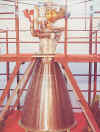
Sanctions were also dropped against the firm Godrej and Boyce. It too produces major components for India’s rockets, such as engines, motor casings and heat shields. Here is a photograph of a liquid-fueled rocket engine that this firm produces.

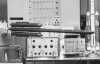
India’s National Aerospace Laboratory performs rocket and missile research. It does wind tunnel testing, ground vibration testing, and it analyzed the first flight test of the Prithvi missile. I have included a photograph of a rocket model wired for testing in this firm’s wind tunnel. It is now free to import American dual-use items.

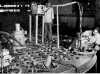
And there is Walchandnagar Industries, which produces major components for uninspected Indian reactors that make plutonium free for use in atomic bombs. Here is a photograph of an end shield that this company produced for the Madras-2 nuclear reactor. Walchandnagar too was freed of export control sanctions.

I would like to emphasize that all of these firms are unquestionably making weapons of mass destruction, and all of them have just been cleared for American exports.

Third, there is the problem of enforcement. A company that violates the law by not applying for a license is rarely punished. For example, in 1996 Silicon Graphics Inc. of Mountain View, Calif., sold four supercomputers to one of Russia’s leading nuclear weapon laboratories without the required export license. The U.S. computers were 10 times more powerful than anything the Russians had before. After the deal was done, Russia’s nuclear chief told the press that Russia would start designing its warheads with simulated explosions using the American computers. There is strong evidence that Silicon Graphics broke the law. It clearly needed an export license and did not get one. The case went to a federal grand jury in 1997, where it has not been heard from since.

In 1999, the Cox Committee found that Hughes Electronics and Loral Space and Communications, two big American satellite makers, “deliberately acted without the legally required licenses and violated U.S. export control laws” when they helped China improve its largest rockets in 1995 and 1996. To boost their profits, these U.S. firms gave China technology that could, in the committee’s words, increase “the reliability of all PRC ballistic missiles.” These cases too went to a federal grand jury well over three years ago and have not been heard from since. I recommend that this Subcommittee ask the Department of Justice to report on their status.

The United States can do a much better job of export control. One improvement would be to make the process transparent. We could start down that path by publishing a comprehensive list of dangerous buyers. The United States now publishes such a list in the Federal Register but it is far too small. The list for China contains only nineteen names. Our government has claimed that a more extensive list would reveal intelligence sources and set off diplomatic conflicts. But it is well-known that scores, if not hundreds of firms in China are active in nuclear, missile and military production. Their names are not secret. It is silly to pretend we don’t know they exist. The same is true of the Indian organizations I mentioned above and scores of other Indian organizations like them. The computer industry, in fact, would welcome a list of dangerous buyers. Industry would prefer to spend its scarce marketing dollars on buyers that don’t present problems.

As a first step in building such a list, I have attached to my testimony the names of 50 firms that are well-known parts of China’s nuclear, missile and military complex. I should point out that this is not a blacklist. It is only a warning list. These names have been selected on the basis of reliable, unclassified information. I recommend that Congress submit these names to the Department of State, and ask for an opinion on whether the names should be included on the published U.S. export warning list. If the State Department judges that these firms should be included, then the Subcommittee should ask the Commerce Department to add the names to the “entity” list in Part 744 of the Export Administration Regulations. American firms should not unwittingly make sales that undermine American security.


Appendix to the testimony of Gary Milhollin, November 7, 2001:
Chinese organizations that should be placed on the U.S. “entities list.”

22nd Construction and Installation Corporation (Yichang)

23rd Construction Corporation (Beijing)

Aviation Industries of China I and II (AVIC) (Beijing)

Beijing Institute of Aerodynamics (BIA) (Beijing)

Beijing Institute of Electromechanical Engineering (Beijing)

Beijing Institute of Electronic Systems Engineering (Beijing)

Beijing Institute of Nuclear Engineering (BINE) (Beijing)

Beijing Institute of Space System Engineering (Beijing)

Beijing Institute of Technology (BIT) (Beijing)

Beijing Research Institute of Uranium Geology (BRIUG) (Beijing)

Beijing Wan Yuan Industry Corporation (BWYIC) (also known as the China Academy of Launch Vehicle Technology [CALT]) (Beijing)

Chengdu Aircraft Industrial Corporation (CAIC) (Chengdu)

China Aerospace International Holdings Ltd. (CASIL) (Hong Kong)

China Aerospace Machinery and Electronics Corporation (CAMEC) (Beijing)

China Aerospace Science and Technology Corporation (CASC) (Beijing)

China Chang Feng Mechanics and Electronics Technology Academy (Beijing)

China Great Wall Industries Corporation (CGWIC) (Beijing)

China Haiying Electro-Mechanical Technology Academy (Beijing)

China Hexi Chemistry and Machinery Company (Beijing)

China Nanchang Aircraft Manufacturing Company (Nanchang)

China National Aero-Technology Import-Export Corporation (CATIC) (Beijing)

China National Aero-Technology International Supply Corporation (CATIC Supply) (Nanchang)

China National Nuclear Corporation (CNNC) (Beijing)

China North Chemical Industries Corporation (NOCINCO) (Beijing)

China North Industries Corporation (NORINCO) (Beijing)

China North Opto-electro Industries Corporation (OEC) (Beijing)

China Nuclear Energy Industry Corporation (CNEIC) (Beijing)

China Precision Machinery Import-Export Corporation (CPMIEC) (Beijing)

China Sanjiang Space Group (Wuhan)

Chinese Academy of Sciences (CAS) (Beijing)

Commission on Science, Technology and Industry for National Defense (COSTIND)

East China Research Institute of Electronic Engineering (ECRIEE) (Hefei)

Harbin Engineering University (Harbin)

Harbin Institute of Technology (HIT) (Harbin)

Hua Xing Construction Company (HXCC) (Yizheng)

Hubei Red Star Chemical Institute (also known as Research Institute 42) (Xiangfan)

Luoyang Electro-optical Technology Development Center (LEODC) (Luoyang)

Nanjing University of Science and Technology (Nanjing)

National University of Defense Technology (NUDT) (Changsha)

Nuclear Power Institute of China (NPIC) (Chengdu)

Research Institute 31 (Beijing)

Shaanxi Institute of Power Machinery (also known as Research Institute 41) (Shaanxi)

Shanghai Institute of Electromechanical Engineering (Shanghai)

Shanghai Power Equipment Research Institute (SPERI) (Shanghai)

Shanghai Xinfeng Chemical Engineering Research Institute (Shanghai)

Shanghai Xinli Research Institute of Power Equipment (Shanghai)

Shanxi Xingan Chemical Material Plant (Taiyuan)

Shenyang Aircraft Corporation (SAC) (Shenyang)

Shenyang Aircraft Research Institute (SARI) (Shenyang)

Xidian University (also known as the Xian University of Electronic Science and Technology) (Xian)

Pakistan Nuclear Update – 2001

Pakistan continues to develop and expand its nuclear weapon capability. Islamabad now possesses an arsenal of approximately 30-50 nuclear weapons. Pakistan claimed that its nuclear blasts in May 1998 had a total yield of 55-63 kilotons, with the largest weapon having a yield of 30-35 kilotons.

However, an independent seismological study suggested that the first test on May 28, possibly involving one or more bombs detonated simultaneously, yielded between 9 and 12 kilotons. The second round on May 30 yielded approximately 4-6 kilotons.

In June 2001, President General Pervez Musharraf vowed that Pakistan’s “mininum nuclear deterrence” would not “be compromised,” but stated that “Pakistan’s nuclear capability is entirely for self-defense.”

Pakistan’s main nuclear sites

Q. Khan Research Laboratories (KRL) (Kahuta): Nuclear weapon research and development; uranium enrichment.

Atomic Energy Minerals Center (Lahore): Uranium and nuclear mineral resource development; runs ore pilot reprocessing plant; production of reactor fuel bundles.

Chagai Hills nuclear test site.

Chashma Nuclear Power Reactor (Chashma): 300-megawatt power reactor.

Dera Ghazi Khan: Uranium milling and conversion.

Karachi Nuclear Power Reactor (Kanupp) (Karachi): 125-megawatt power reactor.

Khushab research reactor and heavy water production plant (Khushab).

Multan heavy water production plant (Multan).

New Labs plutonium processing plant (Rawalpindi).

Pakistan Atomic Energy Commission (PAEC) (Islamabad): Nuclear weapon research.

Pakistan Institute for Science and Technology (PINSTECH) (Islamabad): Research reactors used for tritium production research.

Sargodha airbase (Sargodha): Possible nuclear weapon storage site.

Sihala: Possible site of pilot-scale uranium enrichment centrifuge plant.

Tumman Leghani: Reported new uranium mine (southern Punjab).

Recent developments

Q. Khan Research Laboratories (KRL) (Kahuta): Abdul Qadeer Khan, recognized as the “father of Pakistan’s nuclear bomb,” stepped down as chairman of KRL on March 30, 2001, and joined General Musharraf’s Cabinet as an adviser on science and technology. He was replaced by Dr. Javed Mirza, KRL’s deputy chairman.

Chashma Nuclear Power Reactor (Chashma): The Chinese-built 300-megawatt Chashma reactor (Chasnupp) went critical in May 2000 and was inaugurated in March 2001. A month later, Pervez Butt, chairman of the Pakistan Atomic Energy Commission (PAEC) visited officials at the China National Nuclear Corporation (CNNC) to discuss the construction of Chasnupp II, a 600-megawatt nuclear power plant. In August, Pakistani Finance Minister Shaukat Aziz visited China to ask for investment in a $3.9 billion project that would increase Pakistan’s nuclear power capacity by 2100 megawatts over the next 15 years. Aziz said his first proposal would be an expansion of Chasnupp that would raise its power generating capacity from 300 to 600 megawatts.

Karachi Nuclear Power Reactor (Kanupp): A site survey has reportedly been completed for the construction of a 300-megawatt Kanupp II nuclear power plant.

National Engineering and Scientific Commission (NESCOM): Formed in early 2001 with the merger of the Pakistan Missile Organization (PMO), the Air Weapons Complex (AWC), Pakistan Maritime Engineering and the National Development Complex (NDC), NESCOM is charged with producing sophisticated weapon systems for the Pakistani armed forces. In the summer of 2001, more than 950 senior scientists, engineers, technicians, and PAEC staff were transferred to NESCOM on a permanent basis.

New Labs plutonium reprocessing plant (Rawalpindi): The PAEC is operating this pilot reprocessing facility in Rawalpindi to separate plutonium from spent fuel discharged from the unsafeguarded 50-70 megawatt heavy water-moderated Khushab reactor. U.S. officials have been cited as saying that the Khushab reactor is generating 8-10 kilograms of plutonium per year, enough for at least one nuclear weapon.

It was reported in February 2001 that China’s Seventh Research and Design Institute, which is overseen by the CNNC, had supplied 50 ceramic capacitors to New Labs. The company was reportedly paid through a bank account maintained by an official at the Pakistani embassy in Beijing.

National Command Authority (NCA) and the safety of nuclear weapons
Pakistan established a National Command Authority (NCA) in February 2000. Pakistan’s nuclear weapon program is controlled by the military, and the weapons have reportedly been integrated into the country’s overall military strategy. Islamabad has reportedly developed an effective command and control system for its nuclear forces, and has placed all of its “strategic organizations” – including KRL, NDC and the PAEC – under control of the NCA.

After the terrorist attacks on the United States on September 11, 2001, American military and intelligence officials traveled to Islamabad to discuss the security of the Pakistani nuclear weapon stockpile and its nuclear plants. Officials are fearful that a sustained Western attack on Afghanistan could adversely affect Pakistan, and that Afghan sympathizers in the Pakistani army might seize control of nuclear weapons. President Musharraf discounted this scenario, but one press report claimed that “extremely sensitive” material from sites such as KRL, the Khushab and Chasnupp reactors, and the Chagai Hills nuclear test site had been transported to “special sheds” set up at the Sargodha airbase.

Pakistan’s Main Nuclear Sites

  • A. Q. Khan Research Laboratories (KRL) (Kahuta) – nuclear weapon research and development; uranium enrichment
  • Atomic Energy Minerals Center (Lahore) – uranium and nuclear mineral resource development; runs ore pilot reprocessing plant; production of reactor fuel bundles
  • Chagai Hills nuclear test site
  • Chashma Nuclear Power Reactor (Chashma) – 300 megawatt power reactor
  • Dera Ghazi Khan – uranium milling and conversion
  • Karachi Nuclear Power Reactor (Kanupp) (Karachi)
  • Khushab research reactor and heavy water production plant (Khushab)
  • Multan heavy water production plant (Multan)
  • New Labs plutonium reprocessing plant (Rawalpindi)
  • Pakistan Atomic Energy Commission (PAEC) (Islamabad) – nuclear weapon research
  • Pakistan Institute for Science and Technology (PINSTECH) (Islamabad) – research reactors used for tritium production research
  • Sargodha airbase (Sargodha) – possible nuclear weapon storage site
  • Sihala – possible site of pilot-scale uranium enrichment centrifuge plant
  • Tumman Leghani – reported new uranium mine (southern Punjab)

Testimony: China’s Proliferation Record – 2001

Testimony of Gary Milhollin

Professor Emeritus, University of Wisconsin Law School and
Director, Wisconsin Project on Nuclear Arms Control

Before the U.S.-China Security Review Commission

October 12, 2001

I am pleased to appear today before the U.S.-China Security Review Commission. The Commission has asked me to comment on China’s proliferation record and to recommend possible responses by the United States.

Today, China’s exports are one of the most serious proliferation threats in the world. Since 1980, China has supplied billions of dollars’ worth of nuclear weapon, chemical weapon and missile technology to South Asia and the Middle East. It has done so in the face of U.S. protests, and despite repeated promises to stop. The exports are still going on, and while they do, they make it impossible for the United States and its allies to halt the spread of weapons of mass destruction. For a comprehensive look at China’s export activities, I invite the members of the Commission to examine the charts prepared by the Wisconsin Project entitled “China’s Dangerous Exports” that are available in your briefing packets.

Missile proliferation

According to a report that the CIA submitted to Congress last month, Chinese firms provided missile-related items, raw materials, and/or assistance to Pakistan, Iran, North Korea, and Libya during the last half of the year 2000. And just last month, the China Metallurgical Equipment Corporation (CMEC) (MECC) was sanctioned by the United States for transferring missile parts and technology to Pakistan’s National Development Complex (NDC), which makes the Shaheen-series of solid propellant missiles.

There have also been disturbing reports lately in the press saying that China, in cooperation with North Korea, has contracted to supply titanium-stabilized steel used in making missiles to Pakistan, that China is training Iranian engineers (in China) on inertial guidance techniques, and that China has sold Iran specialty metals and chemicals used in missile production.

Chemical weapon proliferation

In 1995 my organization discovered, and wrote in the New York Times, that the United States had caught China exporting poison gas ingredients to Iran, and that the sales had been going on for at least three years. In 1996, the press reported that China was sending entire factories for making poison gas to Iran, including special glass-lined vessels for mixing precursor chemicals. The reported shipments also included 400 tons of chemicals useful for making nerve agents.

This activity appears to have continued. In May 1997, the U.S. government sanctioned the Jiangsu Yongli Chemical Engineering and Technology Import Export Corporation for contributing to Iran’s chemical weapon program. The same Chinese firm was sanctioned again in June 2001 for helping Iran build a plant to manufacture equipment useful for making chemical weapons.

Nuclear weapon proliferation

China has also been one of the leading proliferators of nuclear weapon technology. In the early 1980s, China gave Pakistan a tested nuclear weapon design and at least some enriched uranium to fuel it. This has to be one of the most egregious acts of nuclear proliferation in history. Then, China helped Pakistan produce high-enriched uranium with gas centrifuges. More recently, it has helped Pakistan build the Chashma 300 megawatt power reactor and the clandestine Khushab reactor which is now producing plutonium for nuclear weapons.

In February 2001, the press reported that China’s Seventh Research and Design Institute, which is overseen by the China National Nuclear Corporation, supplied 50 ceramic capacitors to Pakistan’s New Labs plutonium reprocessing plant. The Institute was reportedly paid through a bank account maintained by an official at the Pakistani embassy in Beijing. The Chinese-supplied Khushab reactor can generate enough plutonium for at least one nuclear weapon per year, and probably more.

It was also reported in April 2000 that China had revived long-dormant negotiations with Iran on the construction of a nuclear graphite production facility. It is important to remember that in October 1997, China assured the United States that China would not supply Iran a uranium conversion facility and would undertake no new cooperation with Iran after completion of two existing projects – a zero-power reactor and a zirconium production plant.

Chinese national export control

The Commission has asked me to comment on China’s export control laws. According to the web site of China’s State Council, China now pursues a

“policy of not endorsing, encouraging or engaging in nuclear weapons proliferation and not assisting other countries in developing nuclear weapons. At the same time, China stresses that the prevention of nuclear weapons proliferation should not impede the international cooperation in peaceful uses of nuclear energy.”

In October 1997, China joined the NPT Exporters Committee, also known as the Zangger Committee. China’s representative to the Committee has stated that China’s policy of not assisting unsafeguarded nuclear facilities extends to activities related to nuclear explosive devices, and that China strictly prohibits any exchange of nuclear weapons related technology and information with other countries. China has also pointed out that its export controls include a “catch-all” authority whereby exports which pose a proliferation risk, whether or not they are on a control list, will be denied export licenses.

Notwithstanding this apparent progress, China’s export control system does not yet meet international standards, according to the U.S. State Department. Chinese entities continue to provide, for example, equipment, technology and materials to missile programs in Iran and Pakistan. China has also helped Pakistan build a plutonium-producing reactor at Khushab. It is still uncertain whether China will implement its export control laws or live up to its international obligations in the future.

China’s global and regional strategy

China’s conduct in export control has not matched its statements about it. China’s policy with respect to Pakistan has been to keep Pakistan even with India in nuclear weaponry, including long-range missiles. Each time India has taken a step forward, China has acted to help Pakistan keep pace. I expect this pattern to continue, regardless of what China says its policies are. China sees Pakistan as an important ally and a bridge to the outside world. This point of view has resulted in a special relationship that China sees as very much in its interest. To a lesser extent, China has maintained a special relationship to Iran, for essentially the same reasons.

China’s motivation is both political and economic. Exports earn money. They also produce diplomatic influence. As long as China can gain these advantages, and do so at an acceptable cost, it is reasonable to expect that China’s exports will continue. For them to stop, the costs would have to start outweighing the benefits.

Are current U.S. export controls strong enough?

The Commission has asked whether U.S. export controls on transfers to China are sufficient to prevent subsequent transfers by China that lead to proliferation. The answer to this question is “no.” The Commerce Department has favored, and continues to favor, exports to China that are likely to undermine U.S. national security. Three cases illustrate the point.

(a) Huawei Technologies

Huawei Technologies is the Chinese company that was recently caught helping Iraq improve its air defenses by outfitting them with fibre optic equipment. The assistance was not approved by the United Nations, and thus violated the international embargo against Iraq.

The history of Huawei shows how American exports to China can wind up threatening our own armed forces. At about the time when this company’s help to Iraq was revealed earlier this year, Motorola had an export license application pending for permission to teach Huawei how to build high-speed switching and routing equipment – ideal for an air defense network. The equipment allows communications to be shuttled quickly across multiple transmission lines, increasing efficiency and immunizing the network from air attack.

Motorola is only the most recent example of American assistance. Other American firms have sold Huawei supercomputers and other equipment. During the Clinton Administration, the Commerce Department allowed Huawei to buy high-performance computers worth $685,700 from Digital Equipment Corporation, $300,000 from IBM, $71,000 from Hewlett Packard and $38,200 from Sun Microsystems. In addition, Huawei got $500,000 worth of telecommunication equipment from Qualcomm.

Still other American firms have transferred technology to Huawei through joint operations. Last year, Lucent Technologies agreed to set up a new joint research laboratory with Huawei “as a window for technical exchange” in microelectronics. AT&T signed a series of contracts to “optimize” Huawei’s products so that, according to a Huawei vice president, Huawei can “become a serious global player.” And IBM agreed to sell Huawei switches, chips and processing technology. According to a Huawei spokesman, “collaborating with IBM will enable Huawei to…quickly deliver high-end telecommunications to our customers across the world.” One wonders whether IBM knew that one of these customers might be Saddam Hussein.

As a result of deals like these, Huawei’s sales rocketed to $1.5 billion in 1999, to $2.65 billion in 2000, and are projected to reach $5 billion in 2001. These are extraordinary heights for a company that began in 1988 as a $1,000 start-up. Real growth did not begin until the mid-1990s, when American help started rolling in. Texas Instruments started its assistance in 1994, and by 1997 had set up laboratories to help Huawei train engineers and develop digital signal processing technologies. Also in 1997, Motorola and Huawei set up a joint laboratory to develop communication systems.

This sudden flood of help was unleashed by the Clinton Administration, which decided in 1994 to remove the need for prior government approval of the export of fiber optic, switching, and telecommunication transmission equipment. The first President Bush had resisted pressure from AT&T, Lucent and US West to decontrol fiber optics, but Clinton freed up the technology over the objection of the National Security Agency, which argued that the widespread use of fiber optics would cripple its eavesdropping ability. A study by the U.S. General Accounting Office found that in the first two years after the decontrol, China bought large amounts of telecommunication equipment suitable for military command and control and intelligence gathering, as well as for civilian uses. It is highly likely that Huawei was one of the buyers.

(b) China Precision Machinery Import-Export Corporation (CPMIEC)

Sanctioned by the United States in August 1993 for missile proliferation, the China Precision Machinery Import-Export Corporation (CPMIEC) has supplied C-801 and C-802 anti-ship cruise missiles to Iran, and, according to United States intelligence, shipped M-11 missiles to Pakistan in 1992. CPMIEC markets and sells the M-family of medium-range surface-to-surface missiles, a variety of shipborne, anti-ship, and tactical missiles, as well as liquid and solid rocket motors, precision machinery, optical equipment, and radars.

The U.S. Commerce Department approved six licenses for export of equipment to CPMIEC from 1989 to 1993. Most notably, the export of a computer workstation for the simulation of wind effects was licensed. The ability to simulate wind effects is something the designer of an anti-ship missile could find useful. The missiles now pose a threat to U.S. ships and sailors in the Persian Gulf as well as to commercial shipping.

(c) China National Electronics Import-Export Corporation (CEIEC)

CEIEC markets electronic and cryptographic systems, radars, mine detection equipment, fiber and laser optics, and communications technology. In the mid-1990s, Iran imported a powerful surveillance radar from CEIEC – it can detect targets up to 300 kilometers away – and integrated it into its air defense system. This radar may have been built using U.S. equipment. Microwave research equipment, a very large scale integrated system for testing integrated circuits, equipment for making semiconductors, and computer equipment were all licensed for export to CEIEC by the Commerce Department from 1989 to 1993.

What can the United States do?

The United States can do a much better job of controlling sensitive exports to the Chinese firms that are developing weapons of mass destruction. The United States now publishes a list of dangerous buyers in the Federal Register. It is essentially a warning list. Before selling any listed company a product that could contribute to the spread of weapons of mass destruction, an exporter is required to obtain an export license. This allows our government to turn down dangerous sales without impeding innocent ones, and enables American industry to keep its competitive edge without arming the world. There will always be the buyer who smuggles, or uses a front company, but without an export license that buyer will find it harder to get the parts and service needed to keep a high-tech enterprise going.

The United States did publish a list of 150 dangerous buyers in India and Pakistan after the two countries tested nuclear weapons in 1998. But so far, our government has not published a comprehensive, worldwide list of such buyers. The U.S. warning list for China, for example, contains only nineteen names. Our government has claimed that a more extensive list would reveal intelligence sources and set off diplomatic conflicts. But it is well-known that scores, if not hundreds of firms in China are active in nuclear, missile and military production. Their names are not secret. It is silly to pretend we don’t know they exist. The computer industry, in fact, would welcome a list of dangerous buyers. Industry would prefer to spend its scarce marketing dollars on buyers that don’t present problems. As a first step in building such a list, I have attached to my testimony the names of 50 firms that are well-known parts of China’s nuclear, missile and military complex. They have been selected on the basis of reliable, unclassified information. I recommend that the Commission submit these names to the Department of State, and ask for an opinion on whether the names should be included on the published U.S. export warning list. If the State Department judges that these firms should be included, then the Commission should ask the Commerce Department to add the names to the “entity” list in Part 744 of the Export Administration Regulations. American firms should not unwittingly make sales that undermine American security.


Appendix to the testimony of Gary Milhollin before the U.S.-China Security Review Commission, October 12, 2001

22nd Construction and Installation Corporation (Yichang)

23rd Construction Corporation (Beijing)

Aviation Industries of China I and II (AVIC) (Beijing)

Beijing Institute of Aerodynamics (BIA) (Beijing)

Beijing Institute of Electromechanical Engineering (Beijing)

Beijing Institute of Electronic Systems Engineering (Beijing)

Beijing Institute of Nuclear Engineering (BINE) (Beijing)

Beijing Institute of Space System Engineering (Beijing)

Beijing Institute of Technology (BIT) (Beijing)

Beijing Research Institute of Uranium Geology (BRIUG) (Beijing)

Beijing Wan Yuan Industry Corporation (BWYIC) (also known as the China Academy of Launch Vehicle Technology [CALT]) (Beijing)

Chengdu Aircraft Industrial Corporation (CAIC) (Chengdu)

China Aerospace International Holdings Ltd. (CASIL) (Hong Kong)

China Aerospace Machinery and Electronics Corporation (CAMEC) (Beijing)

China Aerospace Science and Technology Corporation (CASC) (Beijing)

China Chang Feng Mechanics and Electronics Technology Academy (Beijing)

China Great Wall Industries Corporation (CGWIC) (Beijing)

China Haiying Electro-Mechanical Technology Academy (Beijing)

China Hexi Chemistry and Machinery Company (Beijing)

China Nanchang Aircraft Manufacturing Company (Nanchang)

China National Aero-Technology Import-Export Corporation (CATIC) (Beijing)

China National Aero-Technology International Supply Corporation (CATIC Supply) (Nanchang)

China National Nuclear Corporation (CNNC) (Beijing)

China North Chemical Industries Corporation (NOCINCO) (Beijing)

China North Industries Corporation (NORINCO) (Beijing)

China North Opto-electro Industries Corporation (OEC) (Beijing)

China Nuclear Energy Industry Corporation (CNEIC) (Beijing)

China Precision Machinery Import-Export Corporation (CPMIEC) (Beijing)

China Sanjiang Space Group (Wuhan)

Chinese Academy of Sciences (CAS) (Beijing)

Commission on Science, Technology and Industry for National Defense (COSTIND)

East China Research Institute of Electronic Engineering (ECRIEE) (Hefei)

Harbin Engineering University (Harbin)

Harbin Institute of Technology (HIT) (Harbin)

Hua Xing Construction Company (HXCC) (Yizheng)

Hubei Red Star Chemical Institute (also known as Research Institute 42) (Xiangfan)

Luoyang Electro-optical Technology Development Center (LEODC) (Luoyang)

Nanjing University of Science and Technology (Nanjing)

National University of Defense Technology (NUDT) (Changsha)

Nuclear Power Institute of China (NPIC) (Chengdu)

Research Institute 31 (Beijing)

Shaanxi Institute of Power Machinery (also known as Research Institute 41) (Shaanxi)

Shanghai Institute of Electromechanical Engineering (Shanghai)

Shanghai Power Equipment Research Institute (SPERI) (Shanghai)

Shanghai Xinfeng Chemical Engineering Research Institute (Shanghai)

Shanghai Xinli Research Institute of Power Equipment (Shanghai)

Shanxi Xingan Chemical Material Plant (Taiyuan)

Shenyang Aircraft Corporation (SAC) (Shenyang)

Shenyang Aircraft Research Institute (SARI) (Shenyang)

Xidian University (also known as the Xian University of Electronic Science and Technology) (Xian)

Testimony: The WMD Threat Posed by Iraq

Testimony of Gary Milhollin

Professor Emeritus, University of Wisconsin Law School and
Director, Wisconsin Project on Nuclear Arms Control

Subcommittee on the Middle East and South Asia
Committee on International Relations
United States House of Representatives

October 4, 2001

I am pleased to appear before this distinguished subcommittee to discuss the situation in Iraq. I direct the Wisconsin Project on Nuclear Arms Control, a research project here in Washington that is devoted to stopping the spread of nuclear weapons.

I will begin by describing the threat from Iraq and some recent Iraqi procurement attempts, and then I will comment on the “smart sanctions” proposal put forth by the administration. I will conclude with a few words on the recent terrorist attacks on America.

I would like to submit three items for the record. The first presents the findings from a roundtable that my organization conducted in May 2001. The five panelists were experts chosen on the basis of their experience in Iraq and the Middle East. The second item is a recent article authored by myself and Kelly Motz in Commentary Magazine (accompanied by a news story in the New York Times) which revealed that Iraq continued to buy prohibited military items throughout the 1990s, despite U.N. sanctions. The third is a table my organization prepared after the inspectors left Iraq in 1998, which lists what remains unaccounted for in Iraq’s mass destruction weapon programs. This list is still relevant to the issues we face today.

These documents can also be found electronically on our Iraq Watch web site: http://www.iraqwatch.org. This comprehensive web site monitors Iraq’s progress in building weapons of mass destruction and has as its goals increasing public awareness of the strategic situation in Iraq and making detailed knowledge of Iraq’s weapon status available to policy-makers, the media, private scholars and the general public.

What has Iraq been doing recently?

Since the cease fire agreement that terminated the Gulf War in 1991, Iraq has waged an unceasing political struggle with the United States and its allies, the object of which has been to undo the strategic results that the Gulf War produced. Iraq sees its programs for developing nuclear, biological and chemical weapons, together with long-range missiles, as essential to the achievement of this goal.

The main restraint on Iraqi arms has been the international trade embargo. It, however, is now eroding – with increasing speed – because key countries no longer support it. The decline of the embargo has removed virtually all incentive for Iraq to disarm or to re-admit U.N. inspectors, who were forced out in December 1998. These developments, coupled with the present rise in Iraq’s oil income, will produce a steady increase in Iraq’s military might, with weapons of mass destruction as part of the mix.

Such a military resurgence in Iraq is certain to destabilize the Middle East. It will also complicate the peace process. If Iraq continues an all-out drive for mass destruction weapons, Iran must try to match the effort. Egypt and Saudi Arabia will also be watching. A growing nuclear, chemical, and biological arms race between Iraq, Iran and possibly other countries in the region will, in turn, make it difficult for Israel to feel secure enough to make the concessions that would have to accompany peace in the Middle East. The price of not making things better in Iraq could be to make them worse in the region.

Iraq’s procurement network is a vital component of its weapon effort. This network, which years of U.N. inspections have failed to eradicate, has remained active despite the embargo. It can be expected to put Iraq’s recently-enhanced oil revenues immediately to work.

Iraq’s mass destruction weapon threat

Iraq’s biological capability now presents the greatest threat. Iraq has become self-sufficient in biological weaponry; it possesses the strains, growth media and infrastructure necessary to build a biological arsenal. Iraq also retains stocks of chemical agent from the period of the Gulf War and is known to have all the elements of a workable nuclear weapon except the fissile material needed to fuel it. Iraq’s authorized program for developing short-range missiles will also enable the building of longer-range missiles, and Iraq is showing an interest in cruise missiles and unmanned aerial vehicles, apparently to deliver chemical or biological payloads.

When the U.N. inspectors left Iraq in December 1998, they were convinced that Iraq had not revealed the full extent of its weapon programs, and still retained important capabilities. Iraq now seems to have everything it needs, for example, to produce biological weapons. Iraq already possesses the necessary biological strains, some of which are endemic, so there is no need to rely on imports. It also has equipment for producing microorganisms. The total amount of germ agent Iraq produced (anthrax, botulinum, gas gangrene, aflatoxin) was never revealed to the inspectors, who know only that Iraq’s production capacity far exceeded what it admitted producing. Iraq has simply alleged that its production facilities were not run at full capacity, a claim contradicted by its all-out drive to mass-produce germ warfare agents. Inspectors believe that Iraq retains at least 157 aerial bombs and 25 missile warheads filled with germ agents, retains spraying equipment to deliver germ agents by helicopter, and possessed enough growth media to generate three or four times the amount of anthrax it admits producing. Iraq either claims that these items were destroyed unilaterally, claims they were used for civilian purposes or simply refuses to explain what happened to them. Nor can inspectors account for the results of a known project to deliver germ agents by drop tanks or account for much of the equipment Iraq used to produce germ agents. Finally, Iraq contends that many essential records of its biological weapon program, such as log books of materials purchased, lists of imported ingredients, and lists of stored ingredients, simply “cannot be found.”

There are signs Iraq may be back in the business of developing biological weapons, if indeed it ever left that business. In March 2001, Iraq created considerable suspicion by asking the United Nations for permission to “renovat[e] the laboratories for the production of foot-and- mouth vaccine” using oil-for-food monies. The laboratories in question were at the Daura site, which Iraq had admitted converting in 1990 to its secret biological weapon program. Daura conducted research on hemorrhagic conjunctivitis, human rota virus, and camelpox, as well as enterovirus 70. Iraq also produced thousands of liters of botulinum toxin and admitted to having undertaken genetic engineering research and development there.

Nuclear weapons also remain a clear and present danger in Iraq. Baghdad presently possesses a workable nuclear weapon design and all of the necessary components to build it except the fissile material needed for fuel. It is also known that Iraq has decided to keep its nuclear weapon teams intact. With sanctions against Iraq declining, foreign travel to Iraq increasing, and interactions becoming more common with Russians trying to recover billions of dollars in pre-Gulf War debts, the odds are going up that Iraq may get what it needs. If Iraqcould import the necessary fissile material, it could fashion a bomb in weeks or months.

Iraq’s chemical weapon program is also a danger, despite the fact that U.N. inspectors managed to destroy large amounts of it. Iraq appears to retain small stocks of chemical agents, which could include the highly destructive nerve agent VX. Iraq would, however, have to restart its production plants before turning out strategically significant quantities of chemical munitions.

There is at least some evidence that it may be doing so. In an August 2000 report to Congress, the CIA said Iraq is continuing to rebuild former dual-use chemical weapon plants and missile production facilities, as well as installing or repairing necessary dual-use equipment. In January 2001, Iraq was reported to have rebuilt two factories in the Falluja complex, which produced chemical and biological agents before the Gulf War, and to have resumed the production of chlorine at a third factory. Iraq claimed one of the factories was making castor oil used in brake fluid, but castor beans also contain ricin, a biological agent. The other factory is believed to be producing pesticides and herbicides. Then in April, August Hanning, the director of German intelligence (BND), was reported by the press as saying that Iraq was developing new chemical weapons and that “German companies apparently delivered important components for the production of poison gas to Iraq’s Samarra plant.” Iraq denied these allegations.

U.N. resolutions presently limit Iraq to developing missiles with a range of not more than 150 kilometers. A missile beyond that range would be hard to develop without flight tests, which would probably be discovered. The technologies Iraq has chosen for its short-range missiles, however, are clearly intended to permit follow-on systems with longer ranges. Thus, Iraq’s 150 kilometer Al Samoud missile, which is now under development, is little more than a reduced-range SCUD missile, which has a range of 300 kilometers. Iraq has already shown theability to modify SCUDs to fly more than double their original range, and Iraq still appears to retain a few SCUD-type missiles at a secret location. In addition, the inspectors cannot account for up to 150 tons of missile production materials, or for Iraq’s stockpile of liquid rocket fuel. There is also the problem that the 150 kilometer limit is not self-defining. Iraq could test a longer-range missile by burning only a portion of its fuel, so that it would travel only 150 kilometers, or Iraq could test a longer-range missile with a warhead heavier than the one intended for use, which would cause the test missile to fly a shorter distance than the real one would.

There are also signs that Iraq may be working on other means to deliver biological or chemical weapons. In the same August 2000 report to Congress, the CIA warned that Iraq is still developing an unmanned aerial vehicle, converted from an Eastern European L-29 trainer jet, which the CIA believes is intended to deliver chemical or biological agents. This effort is taking place at the Al-Faris Factory, located in Al-Amiriyah, Baghdad, the same site where Iraq built drop tanks to deliver biological agents before the Gulf war. Iraq actually deployed L-29s to an air base in November 1997 when threatened with attack by the United States.

Iraq also took over several Russian-built crop-dusting helicopters from the U.N. Food and Agricultural Organization in May 2001. While only about half of the original six helicopters are still airworthy, the remaining three could possibly be used to disseminate biological or chemical agents. Before the Gulf War, Iraq’s Technical Research Center at Al Salman developed an aerosol generator for the dispersal of biological agents by modifying helicopter-borne disseminators for chemical insecticides.

Iraq’s Suppliers

Iraq has built these capabilities almost entirely with imports. Before the Gulf War, Western companies sold Iraq turbopumps and rocket nozzles for extended-range Scud missiles, sold special furnaces and presses capable of shaping nuclear weapon components, and built turn-key plants for manufacturing poison gas agents. Without this help, Iraq’s weapon programs could not have achieved anything near the success they enjoyed when the Gulf War began.

These procurement efforts continued during the 1990s, despite the prohibitions of the U.N. embargo. In 1999, our organization revealed that Iraq had imported a half dozen machines called “lithotripters” (which pulverize kidney stones inside the body without surgery) under the guise of humanitarian supplies. Each machine, however, required a high-precision electronic switch that had a second use: it could trigger an atomic bomb. Iraq wanted to buy 120 extra switches as “spare parts.” Iraq placed the order with the German electronics firm Siemens, which supplied the machines but forwarded the order for the extra switches to its supplier, Thomson-C.S.F., a French military-electronics company. It is uncertain whether the French government barred the sale. Stephen Cooney, a Siemens spokesman, claimed that Siemens shipped only eight switches, one in each machine and two spares. Sources at the United Nations and the State Department, however, believe that the number supplied is higher. It only takes one switch to detonate Iraq’s latest bomb design.

In March 2001, our organization disclosed that the Chinese company Huawei Technologies, recently caught supplying fiber optic technology to Iraq’s air defenses, had previously imported a large amount of sensitive U.S. equipment, and had an important license application pending to import more from Motorola. In fact, Motorola proposed to sell routing and switching technology that would have been ideal for improving an air defense network. The technology allows communications to be shuttled quickly across multiple transmission lines, increasing efficiency and immunizing the network from air attack.

Iraq also shopped for military items throughout the 1990s, despite U.N. sanctions. In the article in Commentary, Ms. Motz and I showed that Iraq’s procurement efforts were focused mainly in former eastern bloc countries. We based the article on a series of U.N. reports in which the U.N. inspectors detailed what they knew about Iraq’s foreign suppliers. The reports revealed that in violation of the U.N. embargo, Iraq had continued to “import goods . . . from at least . . . twenty different countries” and that Iraq’s shopping list included “turnkey facilities, full-sized production lines, industrial know-how, high-tech spare parts, and raw materials.”

Iraq made agreements to buy missile and conventional weapon components from companies in Ukraine, Belarus, Romania and Russia. The deals also included high-tech machine tools useful in building both nuclear weapons and ballistic missiles. Jordanian middlemen played a key role in most of the sales.

“Smart Sanctions”

The “smart sanctions” proposed by the administration are not likely to improve the situation in Iraq and could make it worse. The U.S. proposal would retain U.N. control over Iraq’s oil income, would bar Iraq from purchasing arms, and would bar Iraq from purchasing sensitive dual-use items; however, it would allow Iraq to buy almost everything else. The U.N. would stop controlling most of the goods that Iraq now buys with its oil-for-food revenue.

The U.S. proposal is unlikely to help the Iraqi people. Saddam Hussein has deliberately chosen to maintain the suffering of the Iraqi population by refusing to buy civilian goods with his existing oil-for-food revenue. He has used the suffering, in turn, to build pressure for ending U.N. control over his oil revenue. In fact, none of the major players on Iraq’s side in the present debate – Russia, China or France – appear to be motivated by concern about the Iraqi population and neither does Saddam Hussein. Ordinary Iraqis are only pawns in the struggle for control of Iraq’s bank accounts.

Under the administration’s plan, Iraq could find it easier to buy what it needs to rebuild its conventional forces and even mass destruction weapons. Militarily useful items will probably be sent to Iraq under the guise of civilian purchases. In effect, the U.S. plan is a unilateral concession. It relaxes controls on what Iraq can buy, but asks nothing in return. It does not require Iraq to re-admit U.N. inspectors or to take any steps toward disarmament. Its main virtue seems to be that it will diminish complaints from Russia and France that the United States is holding up too many contracts. Simply diminishing these complaints is not an effective policy.

Moreover, there is no reason to believe that Iraq will cooperate with the new sanctions any more than with the previous ones. Thus, the new sanctions may be a slippery slope, with further reductions of sanctions to follow. The illusion of controls would be preserved while sanctions continue to erode.

There is also the problem of smuggling: oil is being smuggled out of Iraq; goods are being smuggled in. In recent years, Iraq’s methods for smuggling oil have grown more sophisticated and the financing harder to trace or block. The smuggling of goods has also grown, and become more sophisticated. It now consists of a multilayered infrastructure that reaches back through the highest levels in Jordan, Syria, Turkey and even Iran. Overall, Saddam’s oil revenue has now reached the levels he enjoyed before the Gulf War. This increased stream of petrodollars has created a political momentum in Iraq’s favor that will be difficult to stop.

There is a reason, for example, why Jordan has not been policing its borders or tracking what goes through its free-trade zones. If machine tools stopped coming out of Jordan, discounted oil would stop coming in. Jordanian middlemen, officials, and others who live off the discount would be hit hard. In addition to $750 million in unregulated oil, Iraq directs oil-for-food contracts through Jordan. The money gives Baghdad enormous leverage.

A similar situation is developing in Syria. Last November, oil began to flow through a newly repaired Iraq/Syria pipeline, all outside U.N. control, at a value estimated at $1 billion a year. Although Secretary of State Colin Powell announced in February a Syrian pledge to bring this revenue under U.N. jurisdiction, Syria has taken no discernible action. As billions of dollars in unregulated cash flow through Damascus, smuggling can be expected to explode. And Lebanon, which this past April was offered a deal similar to Jordan’s, appears to be next. Because Iraq could sell its oil at a much higher price by operating through the United Nations, Iraq is obviously expecting something from the slush funds it has created around its borders.

It is not evident how the administration’s new sanctions proposal could change this equation. The proposal does try to help Iraq’s neighbors pay for more border guards, but it seems to lack any mechanism for replacing the secret profits now flowing from billions in illicit oil sales. There is real doubt whether some of Iraq’s neighbors have the internal coherence to counteract such a large stream of money to their elites – a weakness that Iraq is now exploiting. Moreover, by removing a greater quantity of goods from U.N. review, the proposal may actually increase the opportunities for smuggling in dangerous technology.

Iraq has essentially won the public relations battle over sanctions. The general public no longer realizes that if Saddam Hussein truly decided to disarm, he could clear Iraq’s name in a matter of months, end the embargo, and remove any restraint on the flow of goods to the Iraqi population. He has been rejecting this opportunity, however, for a full decade. Saddam Hussein obviously believes that his ability to produce mass destruction weapons is more important than the billions of dollars in oil income that his country has foregone annually.

In light of this public relations victory, there is no reason for Iraq to see its intransigence as bringing anything but gain. It has achieved much of what it sought – including an easing and possibly a near lifting of sanctions – without conceding anything. By promising and actually providing financial advantages to key countries, Iraq has assembled a number of supporters in both the United Nations and the Gulf region. Therefore, Iraq has little or no incentive to now disarm or cooperate with U.N. inspectors. Iraq is instead buying its way out of the “box” in which the United States says it has been confined.

As a result, Iraq’s procurement network, already back in operation, can be expected to fuel new mass destruction weapon efforts at secret sites, just as it did before the Gulf War. These weapon programs are seen by Iraq as essential to its aims of winning the war of attrition against the United States and dominating the Middle East region. These programs will not be abandoned unless Iraq’s strategic goals were to change.

Links to terrorism

The September 11 attacks on the United States have forever altered the way U.S. officials look at terrorism and the countries that support it. A new sense of urgency can be expected to affect America’s position on every issue touching Iraq, including the debate over sanctions, Iraq’s disarmament obligations, and the enforcement of the no-fly zones.

The United States officially considers Iraq to be a country that supports international terrorism. According to press reports, some U.S. officials have pushed for an immediate attack on terrorist sites in Iraq. Others have been more cautious. Vice President Richard B. Cheney said on September 16 that the administration did not yet have evidence linking Saddam Hussein to the attacks. Secretary of State Colin Powell has argued that time is needed to prepare the diplomatic groundwork for military action, which should take place at first only in Afghanistan.

Meanwhile, reports in the media have pointed to possible ties between Iraq and Osama bin Laden. On September 19, an American press report cited U.S. intelligence officials as saying that an Iraqi intelligence official had met secretly one year ago with Mohamed Atta, one of the hijackers on the first flight to hit the World Trade Center. A second press report cited U.S. intelligence officials as saying that Osama bin Laden had been in contact with Iraqi government agents in the days just prior to the attacks. More recently, the press cited a U.S. official as saying that Farouk Hijazi, an Iraqi intelligence officer who is currently the Iraqi ambassador to Turkey, met with bin Laden in Afghanistan in December 1998. These reports, standing alone, do not constitute evidence of Iraqi state sponsorship of the terrorists who struck America. They do show, however, that possible links to Iraq are being actively investigated.

“Shopping with Saddam Hussein” – Letters from Readers in Commentary Magazine

Commentary Magazine
October 2001, pp. 3-6

Sanctions

TO THE EDITOR:
In their much-publicized article, “Shopping with Saddam Hussein” [July-August], Gary Milhollin and Kelly Motz display a remarkably simplistic and somewhat disingenuous approach to the ongoing efforts to circumvent UN economic sanctions. There is no doubt that these sanctions are violated almost at will by Iraq in order to obtain material that would otherwise be denied under the existing embargo. Yet it is a somewhat fantastic leap to say, as the authors do, that any UN inspection regime, including the recently collapsed “smart sanctions” advanced by the United States and Great Britain, would have “little hope of stopping the Iraqis from sneaking in what they need to rebuild their weapons sites and sneaking out the oil to pay for it.”

To justify this bold assessment, the authors claim that “even when the UNinspection regime was in place, the Iraqis had already figured out how to do just that.” But the fact is that the inspectors from the United Nations Special Commission (UNSCOM) had implemented an extremely effective mechanism for tracking and monitoring Iraq’s clandestine procurement efforts.

The critical fact is that none of the numerous transactions cited by the authors was conducted in violation of relevant UN resolutions. With the exception of the foiled endeavor by Wi’am Gharbiah to bring in Russian ballistic-missile components in 1995 (and even in that case the evidence points to a rogue operation rather than one orchestrated by the Iraqi government), Iraq was not prohibited from possessing any of the material in question, so long as it had been disclosed under the provisions of Resolution 715 (ongoing monitoring and verification) or 1051 (export-import control) prior to arrival in the country. And all items were indeed declared to UNSCOM within the required reporting period.

From 1995 through 1998, as a weapons inspector for UNSCOM, I ran a series of counterproliferation operations known collectively as Operation Tea Cup. The interception of Gharbiah’s shipment in Jordan was the first, and most public, manifestation of this operation, and only UNSCOM, with its strong intelligence relationship with friendly governments, could have pulled it off. For nearly three years, Operation Tea Cup yielded similarly impressive gains, terminating a contract for a glass-lined reactor suitable for both civilian and military activity and tracking down other equipment useful in chemical production processes.

In September 1997, in cooperation with Israeli intelligence, I traveled to Kiev to meet with the head of the Joint Intelligence Center/National Security and Defense Council of Ukraine for the express purpose of investigating the activities of Yuri Orshansky, a figure mentioned by the authors. Although they contend, without any supporting evidence, that Orshansky delivered goods to Iraq subsequent to a series of protocols signed in 1995-1996, my investigation showed the exact opposite: no material brokered by Orshansky or anybody else was delivered to Iraq from Ukraine. I put more faith in my factually supported findings than in the speculative musings of Gary Milhollin and Kelly Motz.

But creative interpretation seems to be their modus operandi. Take the following passage:

Before being forced out in 1998, the UN inspectors compiled a series of confidential reports detailing what they knew about Iraq’s foreign suppliers. . . . What they recount is an ongoing effort to build weapons of mass destruction.

These reports, in truth, recount no such thing. While the many inspections exposed the leakage of the sanctions regime, nothing was discovered that could point to an effort to rebuild Iraq’s weapons of mass destruction.

My reading of these documents provides a much more realistic assessment. Take, for instance, the report of the combined Missile/Export-Import team inspecting the Karama State Establishment (Iraq’s major ballistic-missile facility) on May 27, 1997. During this inspection, Dr. Hamid Khalil Ibrahim, a leading Iraqi missile scientist, told the team that no foreign goods had been received since May 1996. The team then asked Dr. Hamid (as he was known familiarly) about precision machine tools that Iraq had declared to UNSCOM in December 1996. These tools, of Italian manufacture, did not fall under the technical specifications set forth in Resolution 1051, and so were deemed legitimate (despite having been brought into Iraq in violation of sanctions). The same held true for seven boxes of production tools (of Romanian origin) for gyroscopes, and a British-made grinding machine.

The inspection was conducted in a very thorough manner, and concluded as follows: “No proscribed activity or details were observed.” This phrase is repeated throughout the documents UNSCOM produced concerning Iraq’s compliance with its obligations under the Ongoing Monitoring and Verification (OMV) plan. In fact, since the implementation of Resolution 1051, the inspectors uncovered not a single example of proscribed export-import activity. How Gary Milhollin and Kelly Motz can assert the contrary escapes me.

None of this is to deny today’s harsh reality that goods are pouring through the defunct, and discredited, regime of economic sanctions. Is Iraq using the oil-for-food program to support such activity? Of course it is. One of the last major operations I carried out under Tea Cup was aimed at disrupting efforts to obtain ballistic-missile technology and production capabilities from Aerofina, a Romanian military-industrial company. In the end, none of the activity turned out to be of a proscribed nature, but intercepted conversations between the Iraqi team, headed by Dr. Hamid, and his Romanian intermediary pointedly referred to the oil-for-food program as a means of facilitating the transfer of goods from Romania. He said: “We would use the oil-for-food agreement. The Jordanians don’t ask why, so we could call it ‘electrical parts for sewage system,’ ‘pumps for irrigation,’ ‘coolers for water pumps,’ ‘machine tools,’ ‘instrumentation for pipelines,’ or ‘raw materials.’”

Clearly, then, the Iraqis were, and probably still are, violating the economic sanctions by misrepresenting goods as part of the so-called humanitarian relief effort. But such violations do not automatically translate into schemes for acquiring weapons of mass destruction; in linking the two, Gary Milhollin and Kelly Motz are mixing apples and oranges. Nor does the failure of one program (sanctions) automatically translate into the failure of another (inspections). In fact, the history of UNSCOM’s work shows just the opposite: despite the failure of the sanctions regime, inspectors were able to keep a tight lid on Iraq’s ability to rebuild its past prohibited programs.

Unfortunately, on-site inspections have been tossed into the garbage heap by those U.S. policy-makers who seek not the disarmament of Iraq’s weapons of mass destruction but rather the removal of Iraq’s president. It was the mixing of these two disparate objectives that ultimately condemned UNSCOM, and their continued mixing ensures that the United Nations Monitoring and Verification Inspection Commission, UNSCOM’s predecessor, will never be allowed back on the job. Yet the fact is that inspections did, and can, work.

If the authors were sincere, they would try to help formulate a policy that might result in a resumption of inspection activity. That they chose instead to denigrate the process by distorting facts shows that they are motivated by concerns other than nonproliferation. This is a shame, and does a grave disservice to a cause they purport to champion.

SCOTT RITTER
Delmar, New York


GARY MILHOLLIN and KELLY MOTZ write:
Scott Ritter both misunderstands our article and makes a series of claims that are patently false.

Mr. Ritter begins by stating that none of the secret missile deals we described was “in violation of relevant UN resolutions.” He also contends that “Iraq was not prohibited from possessing any of the material in question” as long as it was declared to the United Nations.

Nothing could be farther from the truth. UN Security Council Resolution 661 barred the sale to Iraq by any nation of “any commodities or products,” with only two exceptions: “supplies intended strictly for medical purposes, and . . . foodstuffs.” Resolution 661 was passed in 1990 and was in force when the deals we described were carried out. Does Mr. Ritter believe that gyroscopes and other missile-guidance components are food? Or medicine? Does he think that Saddam Hussein bought them to make sandwiches or bandages?

Missile parts are also munitions—that is, arms. As such, they are also barred from sale to Iraq by UN Security Council Resolution 687, adopted in 1991 and in force during the period we discussed. Resolution 687 not only bans the sale of “arms and related . . . components” to Iraq, it bans even the “promotion or facilitation” of such sales. There is no question that both Resolution 661 and Resolution 687 expressly forbade the deals we described. As a former UN inspector, Mr. Ritter must know that.

That Iraq was not prohibited from possessing any of the imported material is also false: the illegal status of the import followed the goods into the country. Mr. Ritter tries to obscure this point by claiming that Iraq “declared” all the items it illegally imported. He is misleading the reader: in fact, Iraq declared its secret imports only after the UN inspectors had discovered them independently. Seized Iraqi documents make it clear that Iraq intentionally did not declare illegally imported items, “in order to avoid problems.” This, too, Mr. Ritter should know perfectly well.

Citing secret missile contracts with the Romanian company Aerofina, Mr. Ritter claims that none of Aerofina’s deals with Iraq “turned out to be of a proscribed nature.” Yet Aerofina agreed to supply missile-engine parts, gyroscopes for missile guidance, the tools and equipment needed to produce these items, and the equipment needed to test them. Iraq claimed that these purchases were made for short-range missiles, which it is permitted to develop on its own. The crucial fact, however, is that a total arms embargo under Resolution 687 is still in effect on the sale of any missile parts to Iraq—whether for short- or long- range missiles. Thus Mr. Ritter is wrong again: the Aerofina deals were indeed “proscribed.” They were proscribed when they occurred, and they are proscribed today.

In his letter, Mr. Ritter himself admits that Iraq violated the UN sanctions “almost at will.” How he can say that and simultaneously assert that no UN resolutions were being violated is something only he understands.

Mr. Ritter takes considerable pains to argue that none of the goods brokered by Yuri Orshansky, a Ukrainian middleman, was actually delivered. As a criticism of our article, this is disingenuous. We ourselves pointed out that the UN inspectors were “unable to find any of the equipment” they suspected Orshansky of brokering. What we did say was that, in interviews with us, the inspectors offered two possible explanations for this outcome: either Iraq bought the equipment and hid it for future use, or Iraq may have been only shopping and comparing prices. We deemed the latter possibility unlikely after so many trips, so much consultation, and so many contracts for specific items. We think it more likely that secret imports from Ukraine are helping Iraq rearm today.

Perhaps Mr. Ritter’s most surprising assertion is that “nothing was discovered [by the UN inspectors] that could point to an effort to rebuild Iraq’s weapons of mass destruction.” Mr. Ritter himself, while a UN inspector, went to great lengths to penetrate Iraq’s elaborate system of concealment and deception, which employed thousands of persons with no other purpose than to hide Iraq’s efforts to acquire weapons of mass destruction. His present claim is contradicted by his own experience.

There is little doubt that Iraq is still concealing its weapon programs. The strongest evidence is its refusal to admit UN inspectors. This refusal is causing the continuation of the trade embargo, which in turn is costing billions in lost oil revenue. Saddam Hussein obviously thinks that concealing his weapons is more important than feeding his population.

It is untrue that we “denigrate” the inspection process, as Mr. Ritter accuses us of doing. We think the best outcome in Iraq would be to have fully empowered inspectors return and complete the job of disarmament. Unfortunately, the UN’s effort to monitor Iraq’s imports was never intended to stop illegal sales, and was never effective in doing so. Instead, it was established to allow Iraq to import dual-use goods and to insure that they were used for legitimate purposes. Now that the inspectors are gone, Iraq is free to use its imports, legal or illegal, for any purpose it wishes.

Finally, Mr. Ritter seems to be confused about which government is responsible for getting UN inspections—in his words—“tossed into the garbage heap.” By attacking the U.S., he is fingering the wrong culprit; the Iraqi government is solely responsible for prohibiting the return of inspectors. Worse, by blaming the U.S., Mr. Ritter is implicitly condoning Iraq’s continued flouting of UN resolutions. This curious stance, when added to his other invalid claims, leads one to wonder whose side he is really on.


Shopping with Saddam Hussein

Commentary Magazine
July-August 2001, pp. 23-7

Whether or not the world is ready, Saddam Hussein is back. With oil income now reaching the levels he enjoyed before the Gulf war, Iraq’s president is beginning to buy his way out of the “box” in which former Secretary of State Madeleine K. Albright famously declared we had confined him.

What Saddam chooses to spend his money on is of cardinal importance. During the decade before the 1991 Gulf war, when he could buy what he wanted, his weapons scientists imported factories to make poison gas, strains of microbes for germ-warfare agents, missiles that during the Gulf war would kill U.S. troops in Saudi Arabia, and equipment that, had the war not intervened, would long since have produced an atomic bomb.

But the Gulf war did intervene, and as a consequence, after its troops were routed in Operation Desert Storm, Iraq pledged to disarm. To verify that it had done so, a UN inspection regime was put into place, coupled with a ban on international trade with Baghdad that had been imposed in 1990. The inspectors were in for a big surprise. They uncovered a complex of secret sites in which virtually every kind of weaponry of mass destruction was being fabricated. Iraq had purchased giant magnets and centrifuges for enriching uranium, had imported German components to enhance the range of Scud missiles purchased from the Soviet Union, had bought plants for producing chemical and biological agents, and had actually loaded those agents into warheads. (The record of these purchases can be found in our online publication, IraqWatch.org.)

It was these discoveries, and the resulting friction with Saddam’s regime, that led in 1998 to the UN inspectors being forced out. The sanctions on international trade, however, remained in place, though increasingly they had come to resemble what President Bush last January characterized as so much “Swiss cheese.” Now a joint British-American proposal has been put forward that would replace the current broad-based sanctions with prohibitions only on the sale of arms and some civilian “dual-use” items. The new arrangement would also continue the current “oil-for-food” system, under which Iraq can sell as much oil as it wants but is supposed to deposit the revenue in a UN-supervised escrow account and use it only to buy civilian goods that the UN has specifically approved.

The new proposal—whether adopted by the UN or not—has little hope of stopping the Iraqis from sneaking in what they need to rebuild their weapons sites and sneaking out the oil to pay for it. For the truth is that even when the UN inspection regime was in place, the Iraqis had already figured out how to do just that.

Here is how the system works. Suppose an Iraqi site needs a new computer-controlled machine tool, one especially capable of making the high-precision parts needed for long-range missiles or nuclear weapons. Since such a purchase would be vetoed at the United Nations, the order goes instead to a middleman in Jordan. The middleman contacts the manufacturer, who cannot export to Iraq without the approval of the UN but is perfectly free to export to Jordan, unhampered by any embargo. The machine goes to the free-trade port of Aqaba, where the middleman—listed falsely as the final user—loads it on a truck and illegally sends it to Iraq.

The international community’s export-control system operates on the assumption that, in such cases, at least some steps will be taken to stop goods at the border, or, failing that, to punish malefactors later. But neither is happening. The only trucks that stop at the border between Jordan and Iraq are the ones carrying goods bought under oil-for-food contracts that have been authorized by the UN. These come to rest inside Iraq itself so that UN monitors can check the paperwork, thus enabling the seller to get his money. Other trucks, carrying contraband cargo, simply cross the border unchecked.

And how does the contraband cargo get paid for? According to the latest estimates, Jordan imports, at discount prices, about $300 million worth of Iraqi oil per year outside the UN oil-for-food program. (Jordan argues that it has no other source of affordable oil, so the UN and the United States have chosen to ignore this continuing breach in the embargo.) To get reimbursed for his hot cargo, the smuggler or his agent presents an invoice to the commercial attaché at Iraq’s embassy in Jordan, who pays him out of the proceeds of the sale of Iraq’s oil shipments. In effect, cut-rate oil is being bartered for whatever Iraq wants to buy.

There is, of course, a reason why Jordan does not police its borders or track what goes through its free-trade zones. If machine tools stopped coming out of Jordan, discounted oil would stop coming in. Jordanian middlemen, officials, and others who live off the discount would be hit hard. Besides, in addition to the $300 million in unregulated oil, Iraq directs oil-for-food contracts through Jordan. The money gives Baghdad enormous leverage.

A similar situation is developing in Syria. Last November, oil began to flow through a newly repaired Iraq/Syria pipeline, all of it outside UN control, at a value estimated at $1 billion a year. Although Secretary of State Colin Powell recently announced a Syrian pledge to bring this revenue under UN jurisdiction, Syria has taken no discernible action. As billions of dollars in unregulated cash pile up in Damascus, smuggling can be expected to explode. And Lebanon, which this past April was offered a deal similar to Jordan’s, appears to be next.

Since Saddam could sell his oil at a much higher price by operating through the UN, he is obviously expecting something in return from the slush funds he has been creating around his borders. What is he getting, and from whom?

Before being forced out in 1998, the UN inspectors compiled a series of confidential reports detailing what they knew about Iraq’s foreign suppliers. We have been able to see these reports, which have never been published. What they recount is an ongoing effort to build weapons of mass destruction. Throughout the 90’s, in violation of the UN embargo and in the teeth of the inspection regime, the Iraqis were continuing to “import goods . . . from at least . . . twenty different countries.” On Iraq’s shopping list were “turnkey facilities, full-sized production lines, industrial know-how, high-tech spare parts, and raw materials.” The success of this import program depended on “a disturbing proclivity on the part of several countries and companies to supply Iraq with missile technology and assistance, despite the sanctions maintained by the United Nations.”

The core of Iraq’s present supply network dates from the early 1990’s. As the result of a decision to concentrate its shopping expeditions in Eastern Europe, Iraqi delegations fanned out to Belarus, Ukraine, Romania, and Russia, waving petrodollars in front of these countries’ once proud but now starving missile and military plants. They returned with suitcases full of illicit contracts for virtually every kind of equipment a missile-maker might need.

The experience in Belarus was typical. In July 1995, a high-level Iraqi delegation arrived in Minsk. It came from the Badr State Establishment, which had achieved renown before and during the Gulf war. Badr’s machine tools had turned out components for the high-speed centrifuges that Iraq was counting on to process uranium for its first atomic bomb. Badr also made parts for the Al Hussein missile, one of which killed U.S. troops in Saudi Arabia during the Gulf war and several of which landed in Tel Aviv. Today, the plant still retains a line of powerful machine tools.

The main attraction in Minsk was a company called Belstroyimpex. There the Iraqis looked at high-end machine tools, a production line for making diamond-cutting tools, and another production line for powder metallurgy. Iraqi records show that a contract for these machines, or for an even longer list of equipment, was then being carried out. The final shopping list included the diamond-cutting tools, which can be used to make precision parts for nuclear weapons and long-range missiles, and a highly sensitive plasma spray machine that can be used to protect nuclear-weapon components from corrosion. The list also included design work for integrated circuits destined for a military electronics plant that, before the Gulf war, had produced military radars, missile components, and equipment for making nuclear-weapon fuel. The deal was obviously not submitted to the United Nations as required; if it had been, it would never have been approved.

Like so much other contraband entering Iraq, the machines traveled first to the free-trade zone in Aqaba. There they lay until word was given to transfer them to the buyer. An outfit in Amman called the Firas Trading Company served as broker. The confidence Iraq placed in its Jordanian arrangement was a marvel to the UN inspectors. As one of them (a non-native speaker of English) put it colorfully, “Iraq does not consider goods laying in a Jordanian free zone being threatened to loose control.”

Indeed not. During visits to the Badr site in 1996 and 1997, UN inspectors discovered both the powder-metallurgy line and the plasma spray machine (the latter manufactured by the Belarus firm Visoky Vacuum). Obviously the contracts had been fulfilled.* As far as anyone can tell, moreover, the Belarus connection is still active: when inspectors visited the Saddam State Establishment—known also as the Saddam Artillery Plant—in 1998, they observed the Iraqis installing fourteen new machines for manufacturing 75-millimeter lenses. The crates were marked “Republic of Belarus, Vitebsk Machine Building Plant” and “Free Trade Zone, Zarka, Jordan.” In light of the fact that the plant was making optical sights for artillery, one inspector remarked: “You can bet the lenses were not for eyeglasses.”

In Ukraine, the Iraqi focus was more specific: missile components. In September 1993, a Ukrainian trader with a Ph.D. in electronics named Yuri Orshansky arrived in Baghdad. He was accompanied by Dr. Yuri Ayzenberg from a Ukrainian firm, Khartron, well known for its ability to design missile-guidance systems. Within two months, an Iraqi delegation would travel to Ukraine to follow up.

The Iraqi delegation was led by Brigadier General Naim Bakr Ali, head of Iraq’s Scud missile-guidance program. With him were two officials from Iraq’s Missile Research and Development Center, and rounding out the team were Brigadier General Safa from Ibn Al-Haytham, Iraq’s largest missile-manufacturing site, and Major Raad from Al-Karama State Establishment, another such site. Their mission was clear: to negotiate agreements for as much help as they could get. As General Naim would himself tell the UN inspectors, his instructions were simple: “If you find something good, sign; if you do not find something good, then don’t sign.”

He signed. In Ukraine, Orshansky, Ayzenberg, and Naim executed a “protocol”—amounting to an outline of future cooperation—that promised Iraq the keys to a trove of missile technology. Ukraine would sell guidance components for surface-to-surface missiles, help Iraq develop batteries of the latest anti-aircraft missiles, provide equipment for missile research, and even establish a college to train missile experts. To get things started, Iraq asked for price quotes on a test stand for rocket motors, a series of gyroscopes and accelerometers for missile-guidance systems, and high-precision machine tools for making missile parts.

Under questioning, General Naim later claimed that the deal was supposed to take effect only after the embargo was lifted, and hence did not violate UN resolutions. As the inspectors pointed out to him, however, the agreement expressly stipulated that it would come into effect “from the moment it [was] adopted by the governments of Ukraine and Iraq”—that is to say, almost immediately. (Both Naim’s superior and the Ukrainian cabinet approved the deal in 1994.) General Naim also claimed that Iraq intended to work only on missiles that could fly under 150 kilometers, permitted under certain UN resolutions. But an appendix to the agreement described a system for “separating the warhead from the bus”; only long-range missiles, which Iraq is not permitted to possess, have warheads that are separated during flight from the rocket engine (or bus) that carries them aloft. In short, Saddam Hussein was aiming to project his power as far as possible.

In November 1994, General Naim led another Iraqi delegation to Ukraine. Aided by many of the same experts, he signed a second protocol as ambitious as the first. Khartron was now to provide four different types of missile guidance, two of them for separable warheads. According to the protocol, Iraq had already given Khartron the data needed to build the first type, and a schedule was included for receiving the data for the other three. Khartron also helped the Iraqis work on missile-guidance problems during the visit itself.

Iraq has always sought independence in missile production, and so the second protocol, like the first, took into account the ability to manufacture. To help the Iraqis do the necessary research toward that end, Ukraine agreed to supply laboratories, a wind tunnel, computer software, technical assistance, and training. For developing guidance systems themselves, Iraq would get raw materials, a production line for key parts, testing equipment, and a “clean room” to allow assembly of delicate parts in an atmosphere free of dust or dirt. Iraq would also get a production line to build rocket engines, plus equipment to test the engines and their sub-assemblies.

All in all, Yuri Orshansky would travel to Iraq at least six times between 1993 and 1995, and Iraq would send at least four delegations to Ukraine. But under questioning by the UN inspectors, General Naim claimed that Iraq had never actually received a single import. “No deals were ever finalized, no money was ever transferred, and not one penny was made” by the company he had set up to handle the missile deals. The inspectors, who concluded that Naim “was rarely honest,” did not believe his story. Nevertheless, they were unable to find any of the equipment listed in the protocols. None of it turned up at the missile sites they were monitoring, nor could they develop any evidence showing that it might be elsewhere.

In interviews with us, the inspectors have offered two possible explanations for this outcome. Either Iraq bought the equipment and hid it for future use, presumably when the inspection regime would be lifted, or Iraq may have been only shopping—comparing prices in Ukraine to those in Russia and Romania, where it was looking at the same kind of equipment. The latter possibility seems unlikely after so many trips, so much consultation, and so many contracts for specific items. More likely by far is that Iraq received some of the Ukrainian equipment it tried so hard to buy, and that the equipment is in use today.

As it turned out, moreover, Orshansky was offering more than just missiles. At an Iraqi site called Al Kawthar, the inspectors found a 300-page file detailing an illegal February 1995 deal for Russian aircraft. The agreement, with Orshansky’s firm Montelect, included Mi-17 helicopters and Su-25 fighter planes—military hardware that the embargo unquestionably banned—as well as engines and guidance systems for remotely-controlled drones. The drones were every bit as disquieting an item as the tanks and planes; they could be used to deliver poison gas or germ-warfare agents.

This Iraqi file did not reveal whether the helicopters and fighters were to be sent directly from Russian factories or were to be assembled in Iraq. A firm called the Russian Aviation Trading House was supposed to do the buying in Russia, and a Lebanese company, Amsar Trading, was to handle the shipping of arms into Iraq and of oil out. Livinvest, a Russian company, would obtain the needed “approvals” from the Russian government.

Whether this deal went through is likewise uncertain. The Iraqis claimed it did not, and that they never paid Orshansky anything. Whether or not that is true, he clearly remains in favor in Baghdad, and Ukrainian companies are still willing to trade. Only this past April, according to a news report from Kiev, more than 100 Ukrainian companies, including makers of space and aviation gear, displayed their wares at a Baghdad trade exhibition. The report quoted none other than “the honorary Iraqi consul in Kharkov,” Mr. Yuri Orshansky.

While Iraqi delegations were signing contracts in Ukraine, they were also signing them in Romania, in some cases for similar equipment. The main place of interest in Romania was Aerofina, a military firm that Iraqis had visited even before the Gulf war. In February 1994, a group of missile experts returned to Aerofina to ask for help with liquid-fueled missiles. This trip led to still further visits; in January 1995, experts from the Ibn Al Haytham and Al Karama missile sites signed a contract with Aerofina for 250 sets of missile-engine parts that Iraq could not produce itself.

This was, of course, egregiously contrary to the UN embargo. Aerofina nevertheless agreed to provide the special valves, sealing rings, needles, and O-rings that Iraq needed. Some of these parts arrived in Iraq around September 1995, intended for a regulator, the part of a missile engine that maintains thrust.

As in Ukraine, the Iraqis were also looking for missile-guidance components. For $1.16 million, Aerofina agreed in July 1995 to supply twenty sample gyroscopes; also included were the tools and equipment needed to produce them, and the equipment needed to test them. Earlier in 1995, Romania’s Industrial Group of the Army similarly agreed to help Iraq develop the propellant for a solid-fueled missile.

In addition to these contracts, the Iraqis managed to get other Romanian firms to sign protocols for an even broader range of assistance. Thus, in March 1995, the company GIA-RA agreed to provide 100 complete missile engines. Another firm, Romtechnica, undertook to provide engine-testing facilities, while a third, Turbomechanica, agreed to sell injectors and turbopumps.

Iraqi missile experts were grilled about all of these contracts by the inspectors. Once again the Iraqis would admit to getting only a small number of items—specifically, the parts for the engine regulators. All the other contracts, they claimed, had been canceled for lack of funds. Although the inspectors opine that Iraq received far more than it admits to, all they know for sure is that none of the contracted items ever turned up at the sites they were monitoring.

But they do know one other thing for sure: a considerable number of Romanian firms stood ready to violate the UN embargo. And it seems they still are. In February, a delegation of Romanian parliamentarians reportedly met with members of the Iraqi secret service to negotiate arms deals. The trip was apparently authorized by a Romanian party leader whose brother, a former Romtechnica employee, has been linked to shady arms deals in the past.

Finally, the Iraqis also tried their luck in Russia. In June 1993, the Al Karama State Establishment, in search of guidance components for Scud missiles, decided to employ a Palestinian middleman named Wiham Garbiyah. That September, Garbiyah shepherded an Iraqi delegation through Moscow on a successful hunt not only for the Scud components but for guidance elements for a much more powerful missile, the Soviet SS-N-18, which, after being launched from a nuclear submarine, can hit targets more than 4,000 miles away. Garbiyah’s first package of missile parts, which seem to have been mainly samples, arrived in Baghdad in December. It contained Scud components plus at least some parts for the SS-N-18.

By April 1995, Garbiyah was back in Moscow searching for more. In Zagorsk, a town near Moscow famous for its monastery and churches, he managed to buy 120 gyroscopes and accelerometers for long-range missiles. The seller was Niikhsm, a missile-dismantlement plant. Another Russian company, Mars Rotor, obligingly tested the instruments before they left the country. On July 15, 1995, Garbiyah shipped the components to Amman and on July 27 got them through to Baghdad.

It is unclear how many of these particular components the Iraqis wound up with. After being tipped off by intelligence sources, the UN inspectors intercepted one of Garbiyah’s subsequent shipments in Jordan. They also pulled a number of guidance components from the Tigris river, where the Iraqis had thrown them to avoid detection. Again, the only thing we know for sure is that Russian firms were ready to sell missile parts in clear violation of the embargo.

Can Saddam’s smuggling network be shut down? Only if it is possible to control the cargoes coming into Iraq and the oil going out. Neither will be easy. In addition to the determined leadership of the United States, what is required to control the cargoes is the cooperation of four countries—namely, Belarus, Ukraine, Romania, and Russia—where America’s writ does not exactly run strong. Belarus is trying to re-integrate itself with Russia, while Russia itself is doing everything it can to help Saddam. Ukraine is mired in political turmoil. The only comparative bright spot is Romania, whose government took positive action in the 1990’s when confronted with the Aerofina deals; there may also be some leverage in Romania’s dependence on international loans. But in general the prospects are bleak.

Could controls work at Iraq’s borders? To change things there, Jordan and Syria would have to start sending all the money they pay for oil to the UN, or withhold it from Saddam in some other way that would dry up his smuggling accounts. They would also have to start blocking his illicit imports, for which the oil shipments, whether discounted or actually free, are acting as bribes. Why should they do that? And what would replace the vast amount of money they would lose?

There may be answers to these questions, but behind all of them lurks the larger question of the West’s political will. While pondering that imponderable commodity, one should reflect upon a particularly chilling item turned up by the UN inspectors: a 1996 directive, from Iraq’s powerful Military Industrial Commission, forbidding any personnel associated with Iraq’s nuclear-weapon effort “to retire, move, transfer, change housing, etc., without the permission of the Iraqi Atomic Energy Commission.” In other words, Saddam Hussein is working to keep his nuclear-weapon teams intact.

Before the embargo began, these teams had the highest claim to Saddam’s resources. Now, as the embargo wanes, and the balances grow in his secret accounts, they can once again buy what they need. Not only is Saddam Hussein back, he is on the way to having nuclear weapons, and the missiles that will deliver them.

* Another piece of evidence that the Jordanian smuggling route was working well turned up in 1998, when the inspectors found a new computer-controlled milling machine at a site that had done missile work before the Gulf war. The machine, built by the Ping Jeng company in Taiwan, had been sent through Aqaba by a Jordanian middleman listed as “Mohanad K. Mohammed.” Documents showed that the machine was built in March 1998, only shortly before turning up in Iraq.

This was after the defection in 1994 of Khidhir Hamza, the regime’s top nuclear scientist; see the review of his recent book,Saddam’s Bombmaker, by Daniel Pipes in the June Commentary.

GARY MILHOLLIN is the director of the Wisconsin Project on Nuclear Arms Control, where KELLY MOTZ serves as a research associate. This is their first appearance in COMMENTARY.

U.N. Sanctions Didn’t Stop Iraq From Buying Weapons

The New York Times
June 18, 2001, p. A6

Two American arms control experts, combing through unpublished reports by a disbanded arms inspection commission, say they found evidence that Iraq continued to buy prohibited weapons or parts long after United Nations sanctions were imposed in 1990.

Many of the purchases appear to have been made in Central and Eastern Europe, the experts, Gary Milhollin, director of the Wisconsin Project on Nuclear Arms Control in Washington, and Kelly Motz, a project researcher, say in a new independent report. They found documents concerning illegal sales or potential sales by companies in Ukraine, Belarus and Romania. Among the purchases made by the government of Saddam Hussein were missile components and high-technology machine tools.

In the past, United Nations arms inspectors for Iraq had been reluctant to identify countries in public reports, in part because there have also been suspicions of illegal trading by companies in Russia, a powerful member of the Security Council.

The report by the Wisconsin Project, to be published on Wednesday in the magazine Commentary, appears as the United Nations Security Council is debating a new “oil for food” program for Iraq that would lift most restrictions on sales of civilian goods to Iraq.

The Council is stymied over American insistence that, given Iraq’s past subterfuges in acquiring weapons of mass destruction, the plan must include an extensive list of items that could only be sold after a review to make sure they were not intended for military use.

“What this shows is that Saddam’s procurement network is alive and well and has been working steadily despite the sanctions,” Mr. Milhollin said in an interview on Thursday. “To stop it, we need to do better.

“There are a lot of companies out there willing to break the embargo, and they’re also going to be willing to take advantages of weaknesses in this list, which means the list ought to be as strong as we can make it. Given his proclivities to divert things and to stop selling oil for his people in order to leverage us out of controlling his money, if there are going to be mistakes made, we ought to make them on the side of being more careful about what he is allowed to buy.”

The sanctions were imposed on Iraq in 1990, after it invaded Kuwait. The oil for food program allows Iraq to sell oil to alleviate suffering of the civilian population under the sanctions. The United Nations monitors expenditure of the profits, with part going to Kurds in the north and reparations for the Persian Gulf war.

France, Russia and China are objecting to the American list of items that would have to be reviewed under the broadened program.

They contend that some items, beyond clearly prohibited arms, are unnecessarily restrictive and will prolong hardships in Iraq that the new oil-sales plan was intended to alleviate.

Some independent experts say United States intelligence agencies are trying to keep certain items out of Iraq that it could use to make American eavesdropping harder, if not impossible.

In negotiations this week in Paris and New York, the Americans agreed to trim the list somewhat, diplomats said. But continuing disagreements over its scope it could cause the Council to miss another deadline, July 3, for establishing the new oil-sales program.

In their article, Mr. Milhollin and Dr. Motz dismiss the debate over the new plan as largely irrelevant. “The new proposal — whether adopted by the U.N. or not — has little hope of stopping the Iraqis from sneaking in what they need to rebuild their weapons sites and sneaking out the oil to pay for it,” they wrote. “For the truth is that even when the U.N. inspections regime was in place, the Iraqis had figured out how to do just that.”

Iraq continues to argue that it has disarmed as required by the Security Council and that sanctions should be lifted without further preconditions. Russia and France, the Council members with the closest ties to Iraq, say that while an automatic lifting of sanctions is not possible, Iraq should be told clearly what it still needs to do so that sanctions can at least be suspended as soon as possible.

A United Nations commission was set up after the gulf war to monitor Iraq’s weapons, but the inspectors were withdrawn in late 1998, in advance of American and British bombing of Iraq. It was that commission’s documents that Mr. Milhollin and Dr. Motz reviewed.

A new arms inspection system was established, but this week its director, Hans Blix of Sweden, told the Security Council again that inspectors from his new United Nations Monitoring, Verification and Inspection Commission must go to Iraq before a suspension can be considered. Mr. Hussein has barred them.

“The completion of both the inventory of unresolved disarmament issues and the identification of the key remaining disarmament tasks,” he wrote in a report to the Council, “will only be possible after the commission’s experts have commenced work in Iraq and have been able to assess what changes may have occurred during the almost two-and-a-half years when there have been no on-site inspections or monitoring in Iraq.”

Among the examples drawn from the documents of the now defunct United Nations Special Commission was a case that began in 1995 when a delegation of Iraqi specialists from the Badr State Establishment, which made sophisticated machine tools, arrived in Belarus with a shopping list that included diamond-cutting tools. They can be used for making precision parts for nuclear weapons and long-range missiles. Those tools and other materials were bought outside United Nations rules, the authors say, and shipped to Iraq by way of the Jordanian free-trade port of Aqaba.

As late as 1998, before arms inspectors were withdrawn from Iraq, the Wisconsin Project article says, United Nations experts saw high-technology lens-making machinery from Belarus being unloaded in Iraq. In Ukraine, the Iraqis wanted to acquire whole laboratories, with training assistance and computer software. The Iraqis say they never made the purchases, and United Nations inspectors never found evidence of them at missile sites or other places.

Ukraine continues to be publicly active in Iraq, however. This year, according to news reports from Kiev, more than 100 Ukrainian companies, some selling space and aviation equipment, exhibited their goods at a Baghdad trade fair.